
01 · Encoded release stages
Repeatable build, test, and deployment steps replaced undocumented individual sequences.
Customer work · Technology
qMetrix needed a repeatable release path for an application changed by several developers. BluePi connected AWS CodeCommit, CodeBuild, CodeDeploy, and CodePipeline so code and configuration could move through test and production without manual deployment steps.
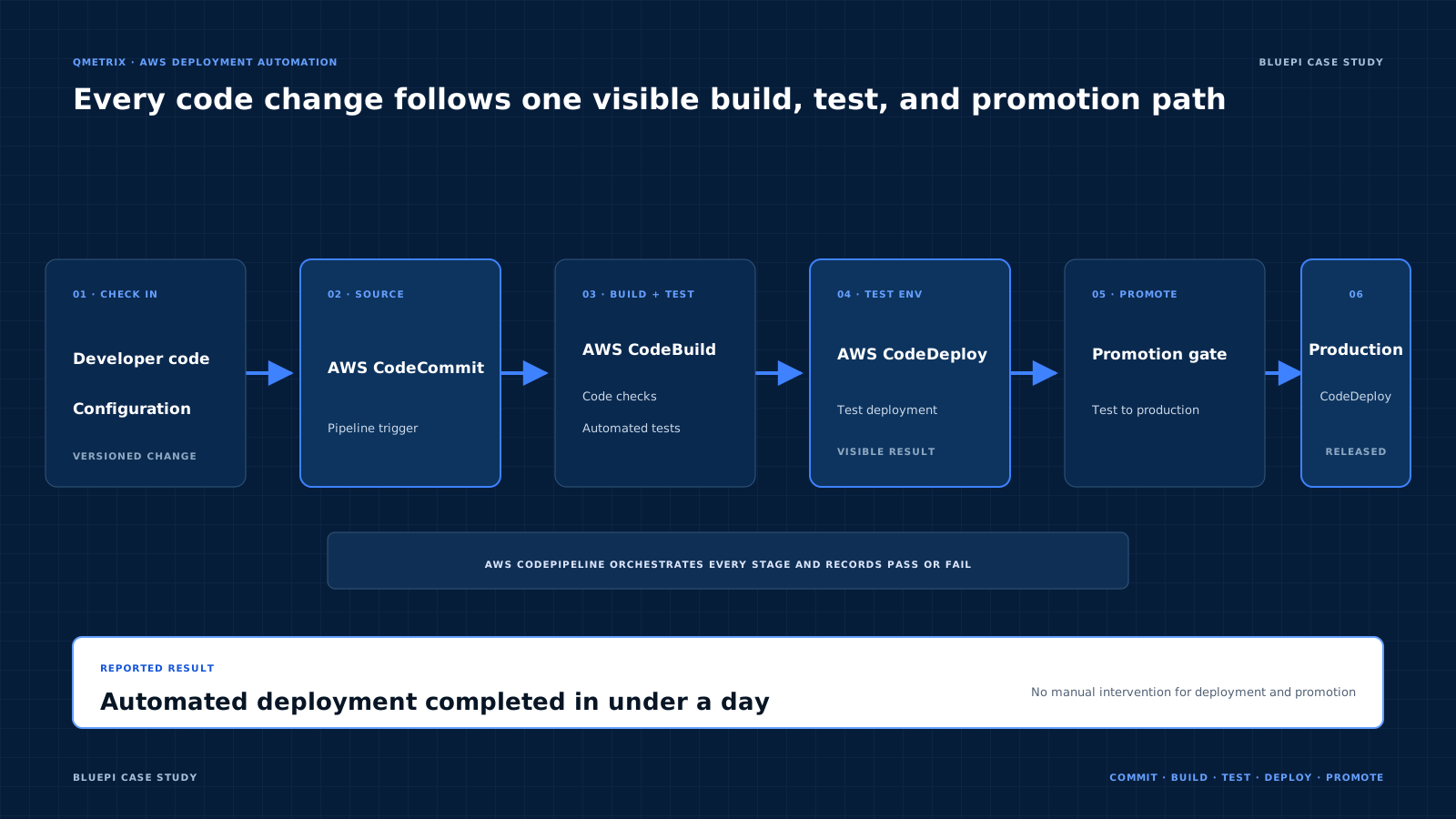
qMetrix needed a more reliable way to move code changes through checking, building, testing, and deployment. BluePi automated the release path so each change had a visible sequence, fewer manual coordination steps, and traceable movement into an environment.
01 · Encoded release stages
Repeatable build, test, and deployment steps replaced undocumented individual sequences.
02 · Visible stopped changes
A failed stage showed where the change stopped and gave developers a clear place to diagnose it.
03 · Traceable deployments
Every change became traceable, deployments completed in under a day, errors dropped, and response to customer needs improved.
BluePi converted the manual sequence into automated code checks, build steps, tests, and deployment actions. Each stage produced evidence for the next decision, and the path made release status visible when a change passed or failed.
Repeatable build, test, and deployment stages replaced undocumented individual steps.
A failed stage showed where a change stopped and gave developers a defined place to diagnose it.
Automated checks returned evidence earlier, reducing the time between a code change and a release decision.
Where this pattern fits
This case remains relevant to data and AI teams that still release pipelines, models, or services through manual sequences. BluePi can map one release path and automate the highest-risk handoffs first.
Use these prompts to decide whether the case fits your operating problem and what a first deployment should prove.
A practical first step is a release-path review. BluePi maps the current build, test, and deployment sequence for one application, marks every manual handoff and recurring failure, and proposes an automated pipeline with measured release duration and rollback behavior. The first automated release becomes the baseline for widening coverage.
Open a section to review the customer problem, implementation, business change, and architecture.
qMetrix delivers customized logistics systems for healthcare and hospitality customers, so the release process had to respond quickly to change requests. Multiple developers worked on one codebase, and every release depended on manual build, test, and deployment steps.
BluePi replaced the manual sequence with an automated pipeline on AWS. Code checking, build, test, and deployment run as defined stages, and every change moves through the same visible path.
Deployments that once depended on manual coordination now complete in under a day, and every release carries a traceable record of what changed.
A customized product with several active developers leaves little room for release ambiguity. The pipeline had to accept frequent changes without requiring a specialist to shepherd each one. Every stage needed a clear pass or fail result so the team could trust the release without repeating checks by hand.
The team judged the pipeline on release duration, error frequency, and how quickly a failed stage could be diagnosed. Automated code checking and testing moved defect detection earlier in the release, when fixes cost less. Each deployment produced a visible record, so the team could trace a problem back to the change that introduced it.
Developers stopped spending release days on manual build and deployment mechanics and returned that time to product work. The team responds to customer needs faster because releasing no longer requires a dedicated manual effort, and a simpler release path reduced the errors that manual steps had made routine.
Developer check-in entered AWS CodeCommit, moved through AWS CodeBuild and automated checks and tests, deployed to the test environment with AWS CodeDeploy, and then moved through promotion into production under AWS CodePipeline orchestration.