
Inventory contract
Define on-hand, available, reserved, in-transit, damaged, expiring, and open-order states at the decision grain. Stale or conflicting records enter an exception path.
Forecast to controlled order
BluePi connects forecast demand, a reconciled inventory position, supply lead times, service policy, and order constraints to a recommended quantity that planners can inspect, approve, and measure.
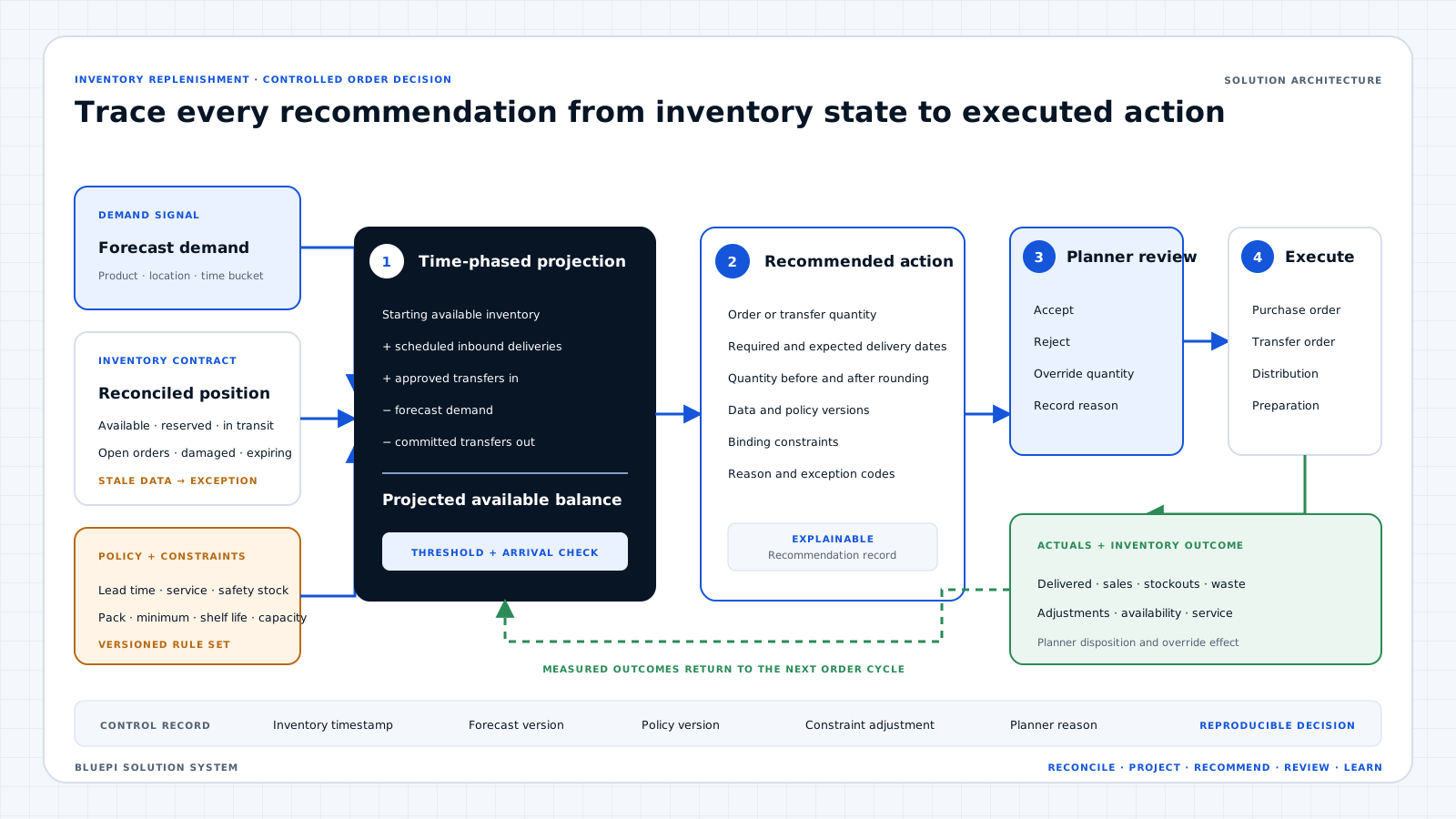
From demand signal to a controlled order decision
Replenishment combines forecast demand with a reconciled inventory position, open orders, supplier lead time, service policy, pack and minimum constraints, shelf life, and business rules.
BluePi connects those inputs to a time-phased projection and a recommendation that retains its data version, policy version, binding constraints, exception state, and planner action.
Define on-hand, available, reserved, in-transit, damaged, expiring, and open-order states at the decision grain. Stale or conflicting records enter an exception path.
Version service targets, safety stock, lead time, review cadence, pack size, order minimums, shelf life, substitution, capacity, and exception thresholds.
Publish the quantity, required date, expected delivery, data and policy versions, constraint adjustments, reason codes, and planner disposition for each proposed action.
When this is the right starting point
Good fit
One operating workflow has a named owner, a measurable baseline, and users who can judge whether the result improves.
Poor fit
The request is capacity-only staffing, an unowned demonstration, or a broad transformation without a first decision and finish condition.
Evidence produced during delivery
Open the part you need. Each section expands into the full delivery scope for that step.
Replenishment starts with the product, location, supplier or source, review cadence, planning horizon, service objective, and cost of a stockout, excess unit, or expired unit. Those choices define when the system should recommend an order or transfer.
The system reconciles inventory states at the grain where the decision occurs. Each state retains its source timestamp and business meaning. A stale or incomplete position becomes an exception instead of entering the recommendation silently.
Forecast demand enters the same time buckets as the inventory projection. The policy layer applies supplier lead time, lead-time variability, review period, service target, safety-stock rule, order calendar, pack size, minimum order quantity, shelf life, substitution, supplier capacity, and location capacity. Policies are versioned so the team can reproduce why a quantity was recommended on a specific date.
The projected available balance combines starting available inventory, scheduled inbound deliveries, approved transfers in, forecast demand, and committed transfers out. The recommendation responds when the projected balance crosses the policy threshold. It also checks whether the order can arrive before the expected shortage and whether pack, minimum, capacity, or shelf-life rules change the feasible quantity.
Each proposed order or transfer carries the product, location, source, required date, recommended quantity before and after constraint rounding, demand and inventory versions, policy version, expected delivery date, binding constraints, exception state, and reason codes.
Planners review stale inventory, missing lead times, unusual demand, constrained supply, order spikes, shelf-life exposure, and recommendations outside agreed thresholds. They can accept, reject, or override the quantity and record the reason.
Approved recommendations enter purchase-order, transfer-order, distribution, or preparation workflows. Delivered quantities, sales, stockouts, waste, inventory adjustments, and planner actions return to the next review.
Measures can include availability, stockout rate, fill rate, inventory cover, excess or aged stock, waste, working capital, order stability, override rate, exception volume, and planning time. The retail demand and replenishment case study shows this workflow in live planning use, with the measurement window and data sources published alongside the results.
The system includes a reconciled inventory position, forecast demand, supplier lead times, service and safety-stock policy, pack and minimum constraints, a time-phased projection, explainable order or transfer recommendations, planner review, execution integration, and outcome monitoring.
The system projects available inventory from starting stock, scheduled inbound deliveries, approved transfers, forecast demand, and committed outbound quantities. When the projection crosses the policy threshold, it calculates a feasible action and applies lead time, pack, minimum, capacity, shelf-life, and calendar constraints.
Start with one category, supplier route, location group, or order cycle. The first deployment needs reconciled inventory, a forecast baseline, explicit service policy, planner ownership, a route into order or transfer execution, and agreed measures for the resulting inventory behavior.
We will review the owner, the baseline, the data path, the system boundary, and the route to go-live.
Discuss one workflow