AI systems for operating decisions
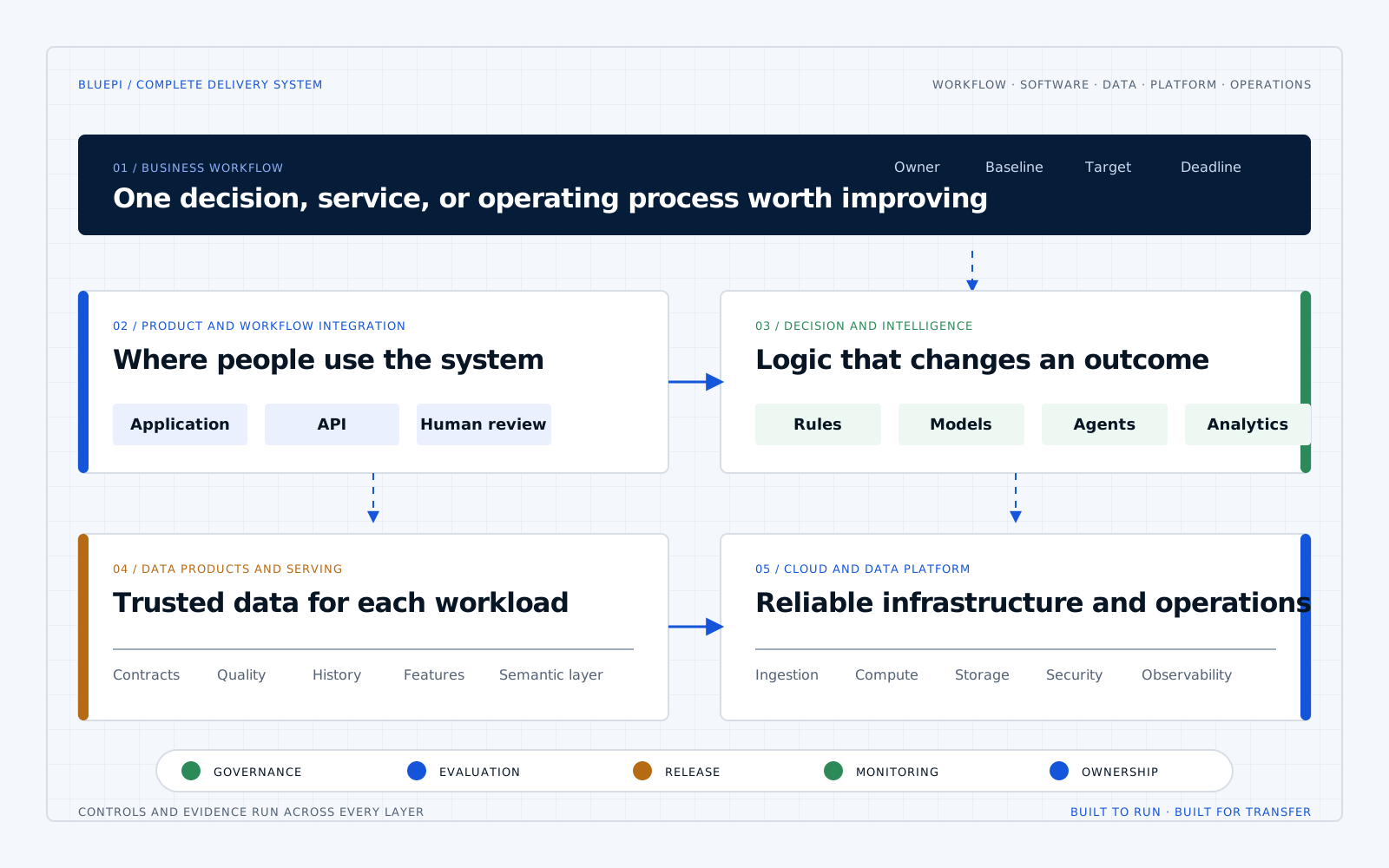
BluePi builds AI systems around a real operating decision or workflow. The work connects trusted data, model behavior, software integration, human review, monitoring, and named ownership so teams can use the system in daily work.
Typical programs include forecasting, recommendation, computer vision, document workflows, customer intelligence, and decision support. Evaluation covers the model, the complete system, and the business process it changes.
Explore AI systems02Agent-assisted delivery
AI-assisted application engineering
BluePi builds and modernizes enterprise applications with engineers who use governed coding agents to map code, implement bounded changes, generate tests, and maintain delivery evidence.
Custom application development, product engineering, API integration, legacy modernization, continuous delivery, security, observability, and ownership transfer move through one controlled delivery path.
Explore AI application developmentData platforms for operating decisions
BluePi designs and builds governed data platforms that connect source systems to data products, analytics, and live applications. Architecture choices follow workload requirements for freshness, reliability, access, performance, and cost.
The delivery covers batch and event ingestion, transformation, quality controls, semantic and serving layers, observability, security, incident handling, and operating procedures that the client team can own.
Explore data platform deliveryData strategy connected to delivery
A useful data strategy makes choices. BluePi maps the decisions that matter to their users, source data, systems, measures, risks, and owners, then turns that map into a sequence the organization can execute.
The roadmap names architecture decisions, work packages, decision gates, skills, cost drivers, and measurable outcomes. A bounded working slice can test the most important assumptions before wider investment.
Explore data strategy engagementsAnalytics and business intelligence
BluePi turns source data into trusted measures and decision-ready analytics for operating and leadership teams. Each important measure receives a defined grain, formula, source, freshness expectation, owner, and accepted use.
Semantic models, reports, access controls, refresh monitoring, performance design, and cost ownership ship together. Where the workflow allows it, measures and alerts connect directly to planning, service, or operational action.
Explore analytics and BI deliveryGoogle Cloud engineering
BluePi is a Google Cloud Partner at the Select tier with a Data & Analytics competency. The team builds and modernizes data and AI systems using BigQuery, Dataflow, Dataproc, Vertex AI, and the surrounding security and operations stack.
Programs cover architecture, migration, ingestion, transformation, governance, analytics, machine learning, systems integration, observability, and cost control. SmartMigrate supports suitable Cloudera and Hadoop transitions to BigQuery with inventory, conversion, and validation tooling.
Explore Google Cloud deliveryAI-ready data foundations
AI in operation depends on data that arrives on time, has a clear owner, and can be traced to its source. BluePi builds the contracts, validation, history, features, access paths, and serving interfaces that models and agents need.
The foundation includes quality thresholds, lineage, training and inference consistency, failure handling, privacy controls, and evidence for release. Teams can diagnose whether a change came from data, code, configuration, or model behavior.
Explore AI-ready data foundationsData governance that runs with the system
BluePi turns governance requirements into operating controls inside the platform and delivery process. Named ownership, access rules, quality expectations, lineage, retention, exception handling, and review evidence become part of normal work.
The approach concentrates effort on important data and decisions. It helps engineering, risk, security, privacy, and business teams make changes through a shared control model instead of relying on a static policy document.
Explore data governance deliveryCloud and platform modernization
BluePi assesses the current system, identifies the constraint, and chooses treatment by component. Retain, rehost, replatform, refactor, replace, and retire decisions depend on operational value, dependency, risk, cost, and team capability.
The migration path includes baselines, platform controls, wave planning, reconciliation, cutover, rollback, and transfer. BluePi’s AWS engineering record and current Google Cloud work provide experience across several generations of cloud systems.
Explore modernization programs10Evidence before release
Evaluation and measurement
BluePi defines how a data or AI system will be judged before release. Evaluation connects data quality, model behavior, system performance, and the operating result to one release and monitoring framework.
The team establishes baselines, test sets, acceptance thresholds, known failure modes, escalation paths, and rollback triggers. After release, the same measures support drift detection, exception review, incident analysis, and improvement.
Explore evaluation and measurement