
Good fit
One operating workflow has a named owner, a measurable baseline, and users who can judge whether the result improves.
Control and evidence
BluePi turns governance requirements into named ownership, platform controls, review paths, and evidence inside delivery.
For governance that must change daily behavior
BluePi connects governance to the systems, data products, reports, models, and workflows where risk and trust are created. The scope can include metadata, quality, access, privacy, lineage, retention, and operating ownership.
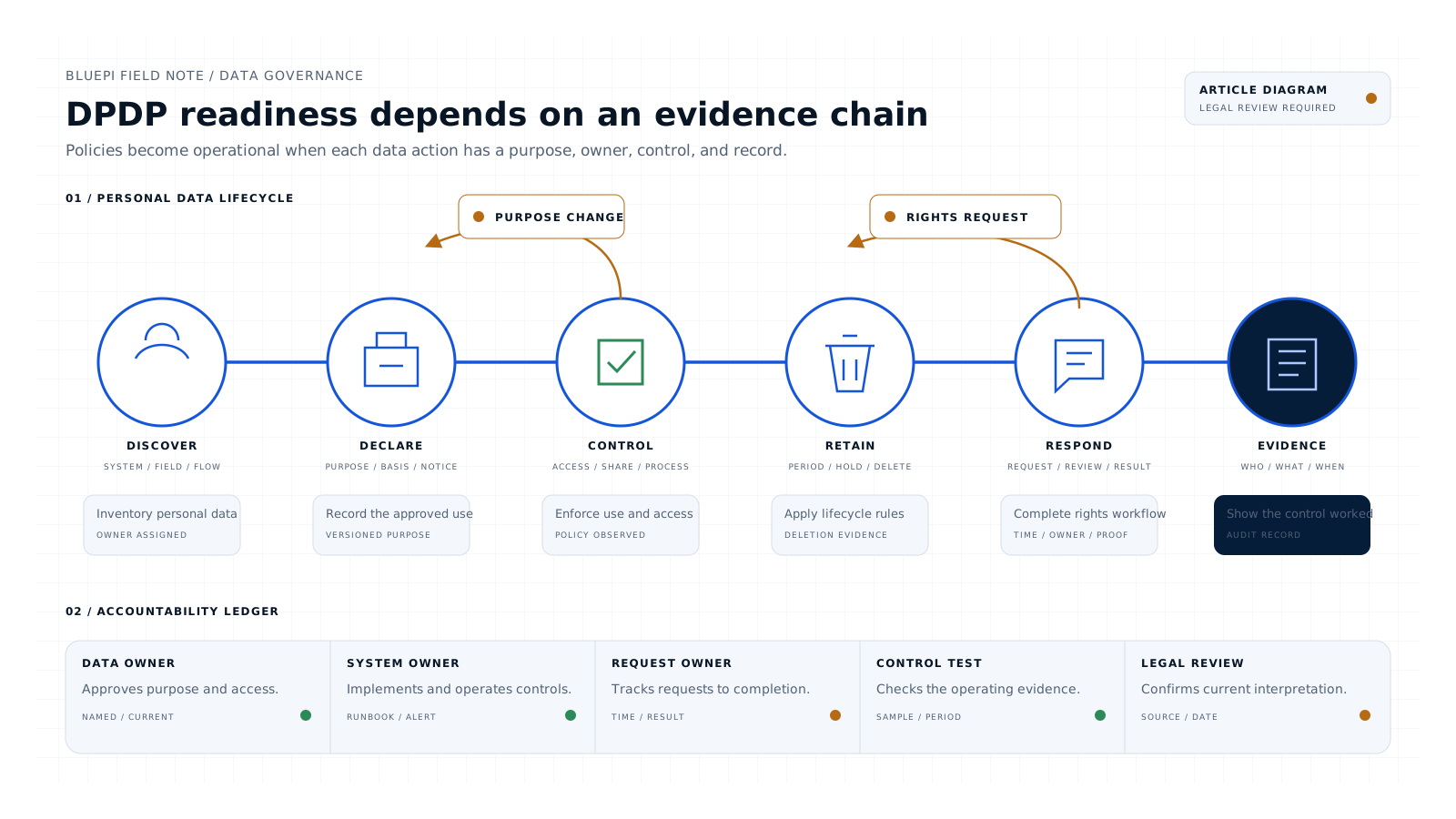
For readiness under India’s Digital Personal Data Protection Act (DPDP), BluePi traces personal data through purpose, collection, access, sharing, retention, deletion, and rights workflows. Technical and process controls are linked to evidence that owners can review.
When this is the right starting point
Good fit
One operating workflow has a named owner, a measurable baseline, and users who can judge whether the result improves.
Poor fit
The request is capacity-only staffing, an unowned demonstration, or a broad transformation without a first decision and finish condition.
Evidence produced during delivery
01
The first scope covers data that supports material decisions, regulated processing, customer workflows, or AI systems.
02
Teams record meaning, source, allowed use, retention, ownership, access, quality, lineage, incidents, and exceptions.
03
Quality controls define the expected grain, completeness, validity, consistency, freshness, and reconciliation for important data. Scorecards, ownership, alerts, exception handling, and evidence keep those controls active after release.
04
Training data, retrieval sources, evaluation sets, human review, and output retention use the same ownership and evidence model as the underlying data platform.
We will review the owner, the baseline, the data path, the system boundary, and the route to go-live.
Discuss one workflow