
Good fit
One operating workflow has a named owner, a measurable baseline, and users who can judge whether the result improves.
Decision to roadmap
BluePi helps leaders choose the data work that changes an operating result and turns the decision into an implementable sequence.
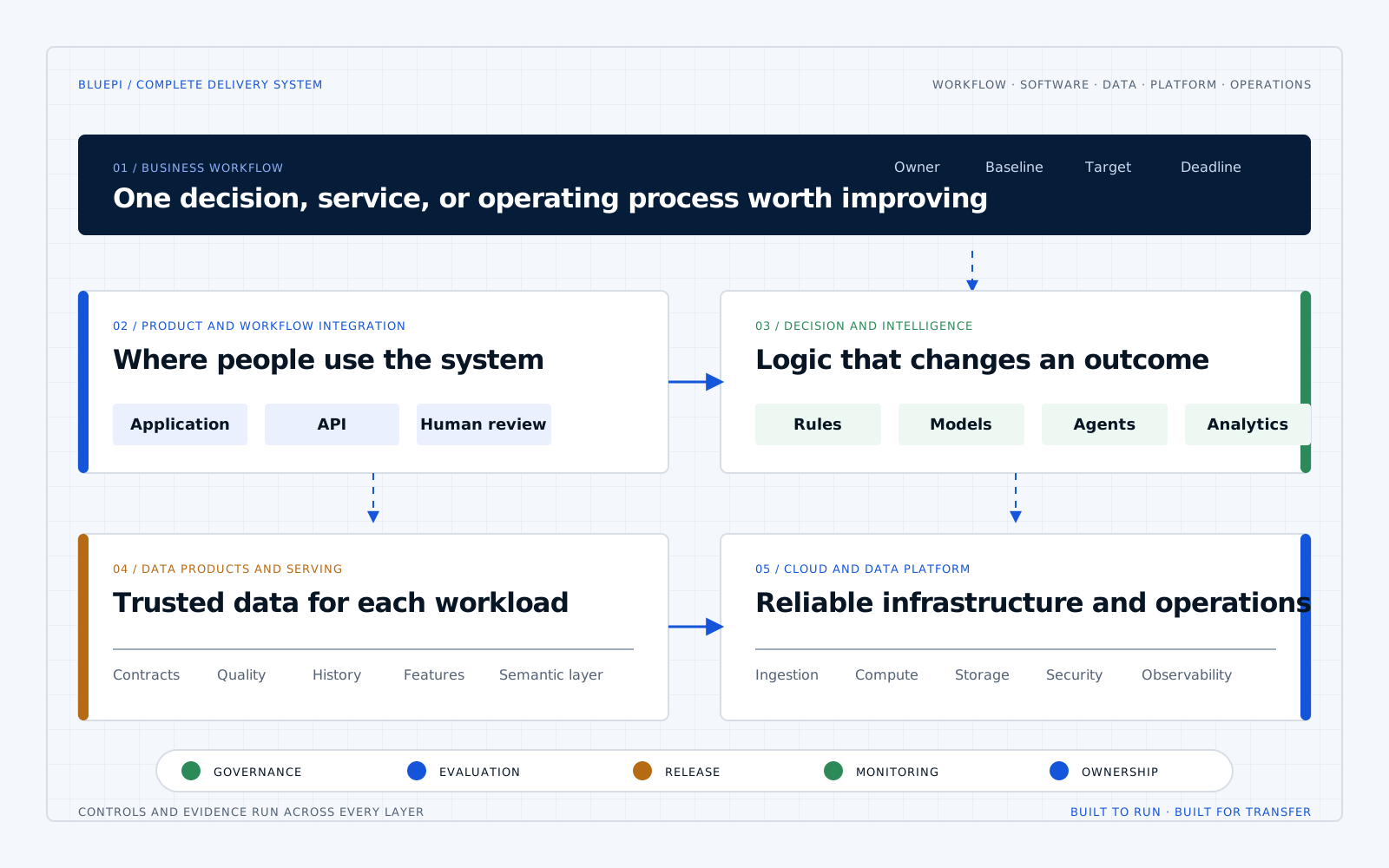
For leaders who need an executable data agenda
A useful data strategy explains which decisions will improve, who owns them, which foundations are required, and how value will be measured. BluePi develops the plan with business, data, security, architecture, and delivery leaders.
The output is designed to guide investment and engineering work. It connects immediate use cases with platform, governance, operating-model, and capability decisions that need a longer horizon.
When this is the right starting point
Good fit
One operating workflow has a named owner, a measurable baseline, and users who can judge whether the result improves.
Poor fit
The request is capacity-only staffing, an unowned demonstration, or a broad transformation without a first decision and finish condition.
Evidence produced during delivery
01
The strategy maps business decisions to users, data, systems, measures, and ownership. It separates immediate delivery work from platform dependencies.
02
BluePi reviews important workflows across ownership, data quality, architecture, delivery, security, governance, adoption, and operations. The assessment records evidence and differences by domain instead of reducing the organization to one generic score.
03
The roadmap defines architecture choices, work packages, decision gates, risks, skills, cost drivers, and measurable outcomes.
04
A bounded working slice tests the assumptions before the organization commits to a larger program.
We will review the owner, the baseline, the data path, the system boundary, and the route to go-live.
Discuss one workflow