
Good fit
One operating workflow has a named owner, a measurable baseline, and users who can judge whether the result improves.
First deployment
A focused 90-day engagement takes one qualified workflow from a measurable starting point to a live release with clear operating ownership.
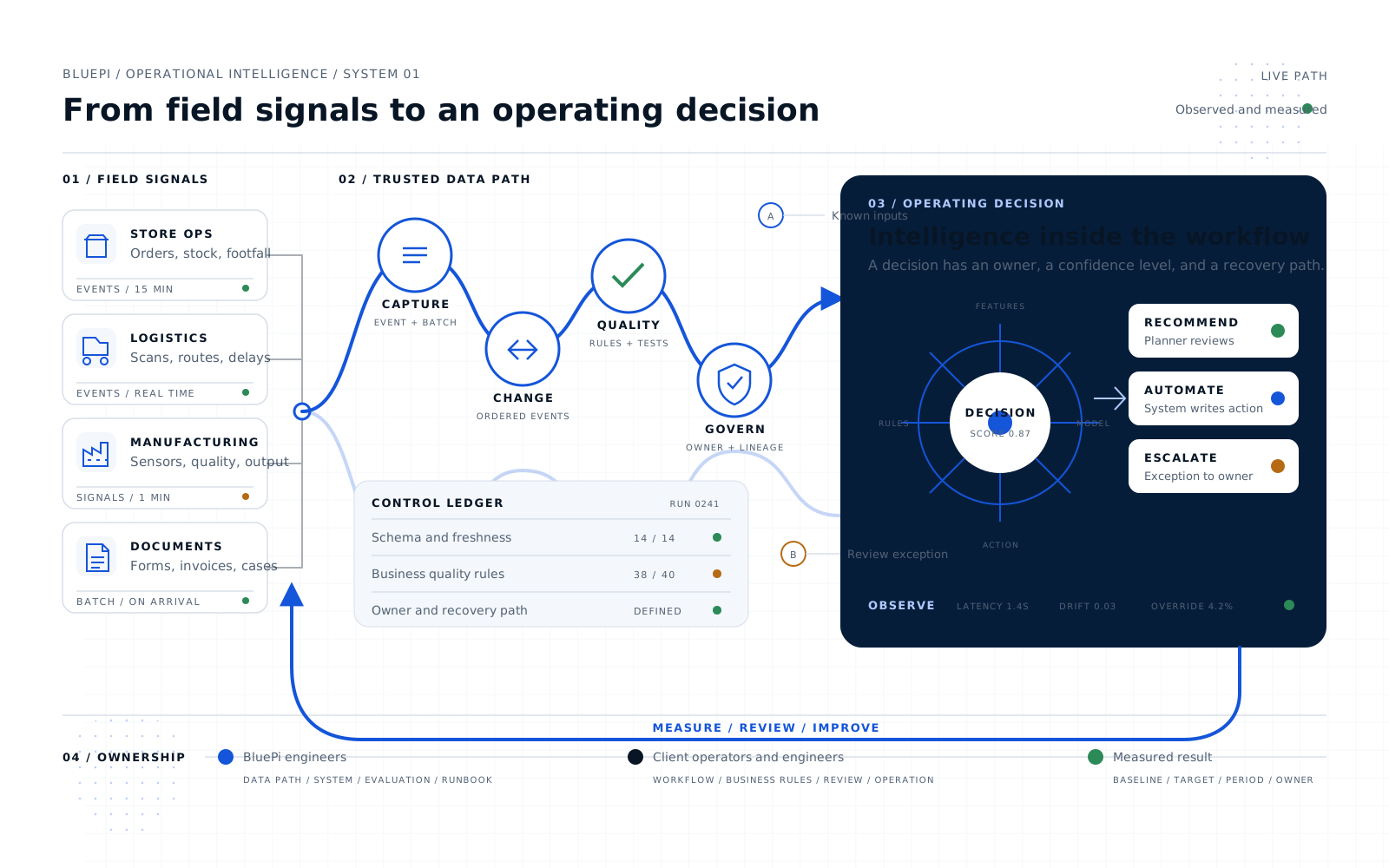
A focused 90-day engagement
The 90-day structure creates urgency around one qualified workflow. It is suited to work with a named owner, accessible data, a measurable baseline, and a credible integration and release path.
BluePi uses time-boxed discovery, a thin working slice, systems integration, complete-system evaluation, and an ownership test. The engagement ends with a live system or a specific evidence record explaining what must change before release.
When this is the right starting point
Good fit
One operating workflow has a named owner, a measurable baseline, and users who can judge whether the result improves.
Poor fit
The request is capacity-only staffing, an unowned demonstration, or a broad transformation without a first decision and finish condition.
Evidence produced during delivery
01
BluePi works with business and technology owners to confirm the workflow, current result, target measure, users, data access, integration points, security constraints, and operating owner. The team also identifies decisions that could delay go-live, including access approvals, source-system changes, test data, and release windows.
A thin working slice tests the highest-risk assumption early. By day 14, you should be able to see the proposed decision path and the evidence needed to judge it.
02
The middle phase connects live data and applications, hardens the architecture, and tests the complete decision flow. Evaluation covers data quality, model or rule behavior, integration, latency, security, cost, human review, and failure recovery.
Users review the system in realistic conditions. Their feedback informs interface, exception, and workflow changes before the release gate.
03
The final phase prepares deployment, rollback, monitoring, runbooks, incident ownership, access reviews, cost controls, and knowledge transfer. BluePi runs the release with your team and records remaining limits and the next improvement cycle.
The 90-day boundary creates focus, but release readiness controls the launch. If a critical dependency is unresolved, the evidence should make that visible before users depend on the system.
We will review the owner, the baseline, the data path, the system boundary, and the route to go-live.
Discuss one workflow