
Build an evidence-based current state
Automated discovery, metadata, architecture, configuration, sampling, and interviews are combined. Findings record source, confidence, owner, affected systems, and material unknowns.
Requirement to control
BluePi maps processing, notices, consent, rights operations, retention, processors, incidents, controls, and evidence for legal review and implementation.
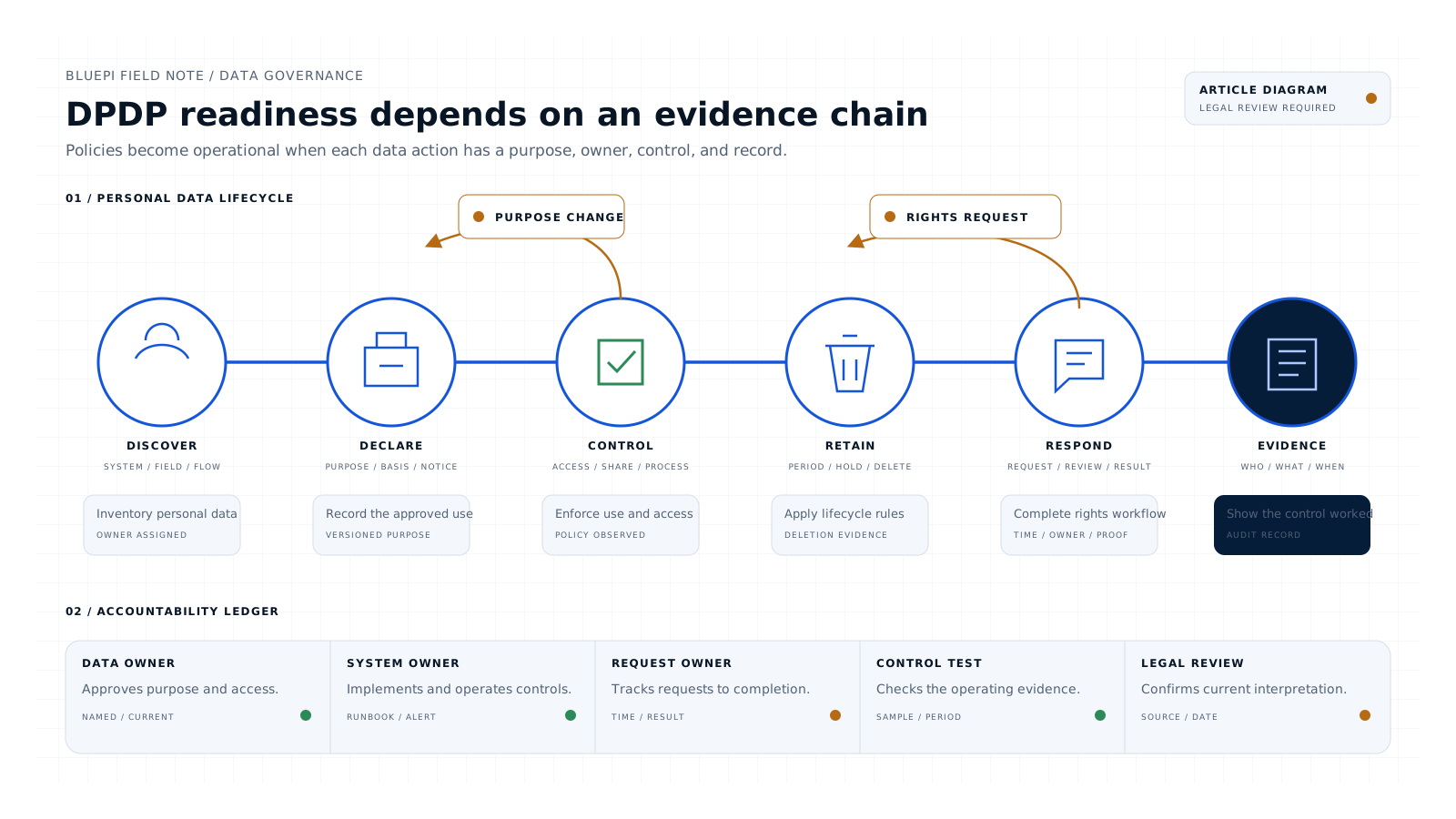
Readiness for India’s Digital Personal Data Protection Act (DPDP)
BluePi helps privacy, legal, security, data, application, and operating owners build a verified view of personal data and the systems and workflows that process it. Legal interpretation remains with qualified counsel.
The readiness program connects purposes, collection, notices, consent where applicable, access, sharing, retention, deletion, security, breach response, and data-principal rights to deployed controls and evidence.
Automated discovery, metadata, architecture, configuration, sampling, and interviews are combined. Findings record source, confidence, owner, affected systems, and material unknowns.
Gaps are assessed by data sensitivity, scale, purpose, user impact, system reach, control weakness, delivery effort, and upstream or downstream dependency.
Each work package names the control, systems, owner, acceptance evidence, exception path, dependencies, and review cadence required to move from policy to operation.
When this is the right starting point
Good fit
One operating workflow has a named owner, a measurable baseline, and users who can judge whether the result improves.
Poor fit
The request is capacity-only staffing, an unowned demonstration, or a broad transformation without a first decision and finish condition.
Evidence produced during delivery
Open the part you need. Each section expands into the full delivery scope for that step.
Record systems, data, processing purposes, owners, processors, access, notices, consent, retention, rights operations, and known gaps.
The output is a risk-ranked backlog with owners, dependencies, evidence requirements, and explicit legal-review points.
BluePi implements data and system controls. Legal interpretation and certification remain with the organization and its counsel.
You leave with a risk-ranked backlog your counsel can sign off and your delivery team can execute: processing mapped, notices and consent reviewed, rights operations designed, retention rules traced, and evidence defined. Legal scope stays with counsel throughout.
Counsel defines legal scope and response requirements. BluePi designs the technical and operating path for receiving, verifying, fulfilling, and recording applicable data-principal requests.
“BluePi’s structured and collaborative approach in data governance and reconciliation helped bring clarity to our data landscape and support informed decision making. We appreciate their professionalism, responsiveness, and commitment to delivering outcomes.”
We will review the owner, the baseline, the data path, the system boundary, and the route to go-live.
Discuss one workflow