
01 · Decoupled service tiers
Web, application, and database layers were separated so one infrastructure event did not stop the full service path.
Customer work · Business services
ChannelPlay needed a tested business-continuity path for applications exposed to single points of failure. BluePi migrated the core estate to a multi-tier, Multi-AZ AWS architecture and implemented disaster recovery with RPO and RTO targets under one hour.
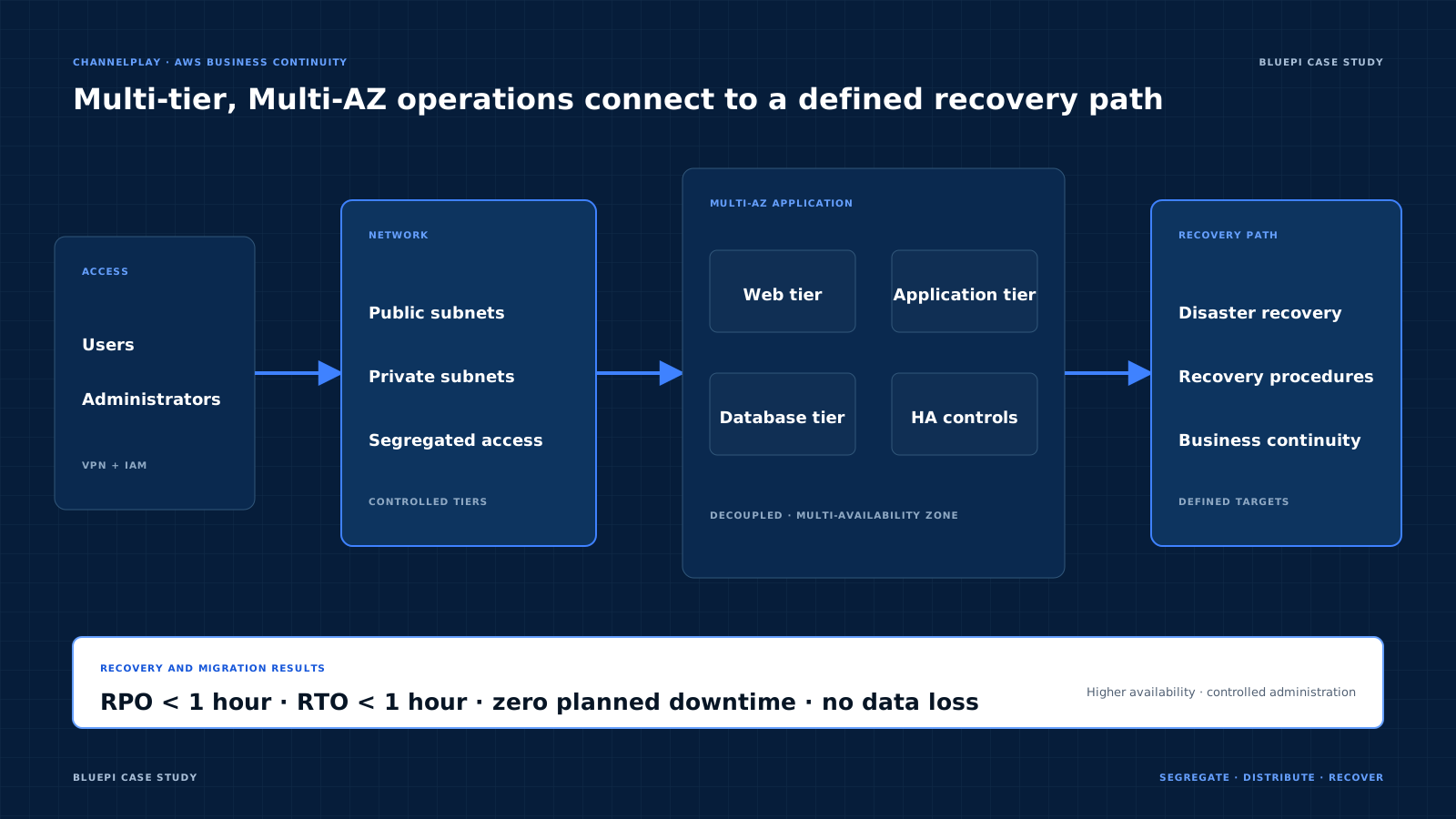
ChannelPlay needed business continuity that covered application tiers, data protection, secure access, and recovery ownership together. BluePi implemented AWS high availability and disaster recovery with a decoupled web, application, and database architecture, Multi-AZ deployment, network segregation, VPN access, and IAM controls.
01 · Decoupled service tiers
Web, application, and database layers were separated so one infrastructure event did not stop the full service path.
02 · Measured recovery goals
Recovery point objective and recovery time objective both came in under one hour.
03 · Secured failover access
Network boundaries, VPN access, and IAM controls applied during normal operation and recovery.
BluePi separated the web, application, and database architecture, deployed across multiple availability zones, segregated networks, and controlled access through VPN and IAM. The migration completed without planned downtime or data loss.
Application tiers and availability zones were designed so one infrastructure event did not stop the full service path.
RPO and RTO targets created measurable expectations for data protection and service restoration.
Network boundaries, VPN access, and identity and access management (IAM) controls applied during normal operation and recovery.
Where this pattern fits
The same continuity questions apply to any data platform or AI service: dependencies and recovery procedures must be tested before an incident, not during one.
Open a section to review the customer problem, implementation, business change, and architecture.
The existing infrastructure lacked tested disaster recovery and high availability. An infrastructure failure could interrupt services and cause data loss, while service owners had no defined recovery sequence.
BluePi migrated ChannelPlay core applications into a multi-tier AWS architecture with public and private subnets, Multi-Availability Zone deployment, high-availability controls, a disaster-recovery path, VPN access, IAM controls, and business-continuity procedures.
The migration completed with zero planned downtime and no data loss. The resulting environment had RPO and RTO targets under one hour, higher availability and performance, and stronger network and administrative access controls.
Users and administrators entered segregated public and private network tiers. Web, application, and database layers ran across Availability Zones, while the disaster-recovery environment and VPN- and IAM-controlled administration supported the recovery path.
Both the recovery point objective and recovery time objective were under one hour. Core applications moved with zero planned downtime and no data loss.
ChannelPlay moved from infrastructure with single points of failure and no defined recovery sequence to a documented business-continuity path with multi-zone availability, recovery targets, and controlled administrative access.