
01 · DB2-to-AWS data movement
On-premises DB2 life-policy data reached AWS through a VPN, with AWS Glue loading raw data into Amazon S3.
Customer work · Financial services
DHFL Pramerica needed a consolidated customer view and a repeatable way to assess risk before recommending insurance products. BluePi built a machine-learning path from life-policy data through AWS Glue, Amazon S3, Amazon EMR, and Amazon Redshift. The system produced high-, medium-, and low-risk customer segments from demographic, education, health, and policy attributes.
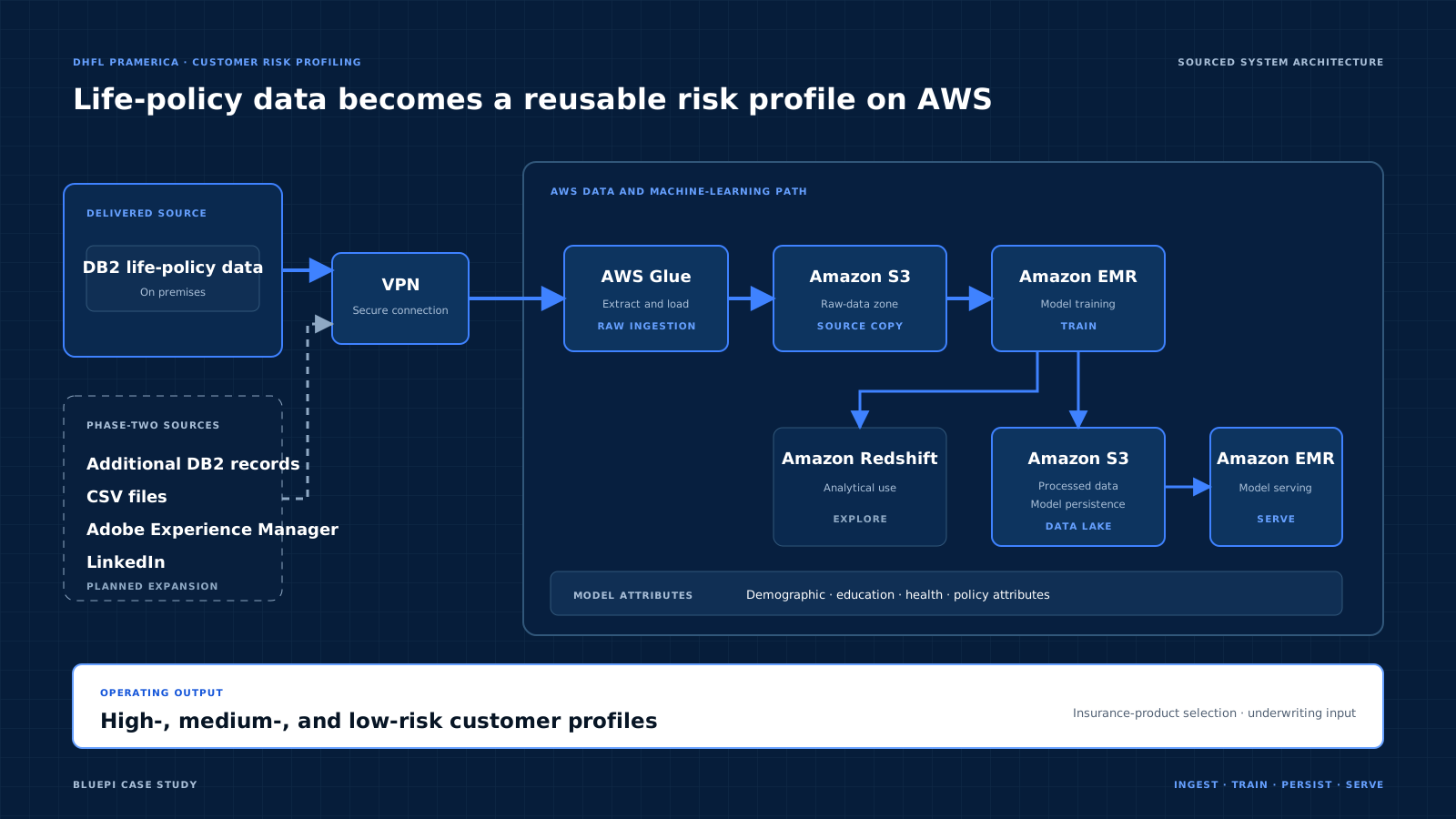
The insurer needed customer attributes from life-policy data to support product-selection and underwriting workflows. BluePi connected on-premises DB2 data to AWS through VPN, loaded raw data into Amazon S3 with AWS Glue, trained the profiling model with Amazon EMR, and persisted processed data and model artifacts in Amazon S3.
01 · DB2-to-AWS data movement
On-premises DB2 life-policy data reached AWS through a VPN, with AWS Glue loading raw data into Amazon S3.
02 · Risk model attributes
The model used demographic, education, health, and policy attributes to classify customers as high, medium, or low risk.
03 · Training and serving split
Amazon EMR trained the model and served the resulting profiles, while Amazon Redshift supported analytical use.
DB2 life-policy data moved to AWS through VPN. AWS Glue loaded raw records into Amazon S3, Amazon EMR trained the profiling model, Amazon S3 stored processed data and model artifacts, Amazon Redshift supported analysis, and Amazon EMR served profiles to downstream use.
Distinct Amazon S3 layers preserved the source boundary while giving training and serving paths controlled model inputs.
Amazon EMR training produced the model artifacts, while a separate Amazon EMR serving path supplied profiles to downstream use.
DB2, CSV, Adobe Experience Manager, and LinkedIn inputs are scoped for phase two; the delivered system runs on the life-policy path.
Where this pattern fits
This case fits insurers that need a repeatable path from policy data to a customer risk profile used in product selection or underwriting. BluePi can begin with one decision, the attributes it requires, and the system boundary that must deliver the profile.
Open a section to review the customer problem, implementation, business change, and architecture.
Customer information could not be combined into a complete view for risk assessment. DHFL Pramerica needed to calculate customer risk aversion consistently and connect the resulting profile to relevant insurance products.
BluePi connected on-premises life-policy data to AWS through a VPN. AWS Glue loaded raw data into Amazon S3, Amazon EMR trained the profiling model, and the data-lake path persisted processed data and model artifacts. Amazon Redshift supported analytical use, while Amazon EMR served the resulting profiles.
DHFL Pramerica gained a reusable customer risk profile for product-selection and underwriting workflows. Risk segments made the basis for product recommendations explicit, while automated profiling reduced the manual work required before underwriting decisions.
On-premises DB2 life-policy data crossed a VPN into AWS Glue extraction and an Amazon S3 raw-data zone. Amazon EMR trained the model, while Amazon S3 persisted processed data and model artifacts. Amazon Redshift supported analytical use, and a separate Amazon EMR path served the resulting profiles.
Additional DB2 records, CSV files, Adobe Experience Manager, and LinkedIn inputs are scoped for phase two. Those planned sources stay outside the delivered life-policy path, so scope stays unambiguous.
Product and underwriting teams gained a shared customer risk profile instead of assembling an assessment from disconnected attributes. The high-, medium-, and low-risk segments connected model output to the insurance-product and underwriting workflows that used it.