
01 · Unified customer behavior
Website, application, CRM, transaction, and campaign data contributed to a usable customer view.
Customer work · Retail and consumer
Ferns N Petals had customer activity distributed across its website, app, CRM, transactions, and campaign systems. BluePi built an AWS customer data platform that unified those signals and supported timely behavior-based personalization.
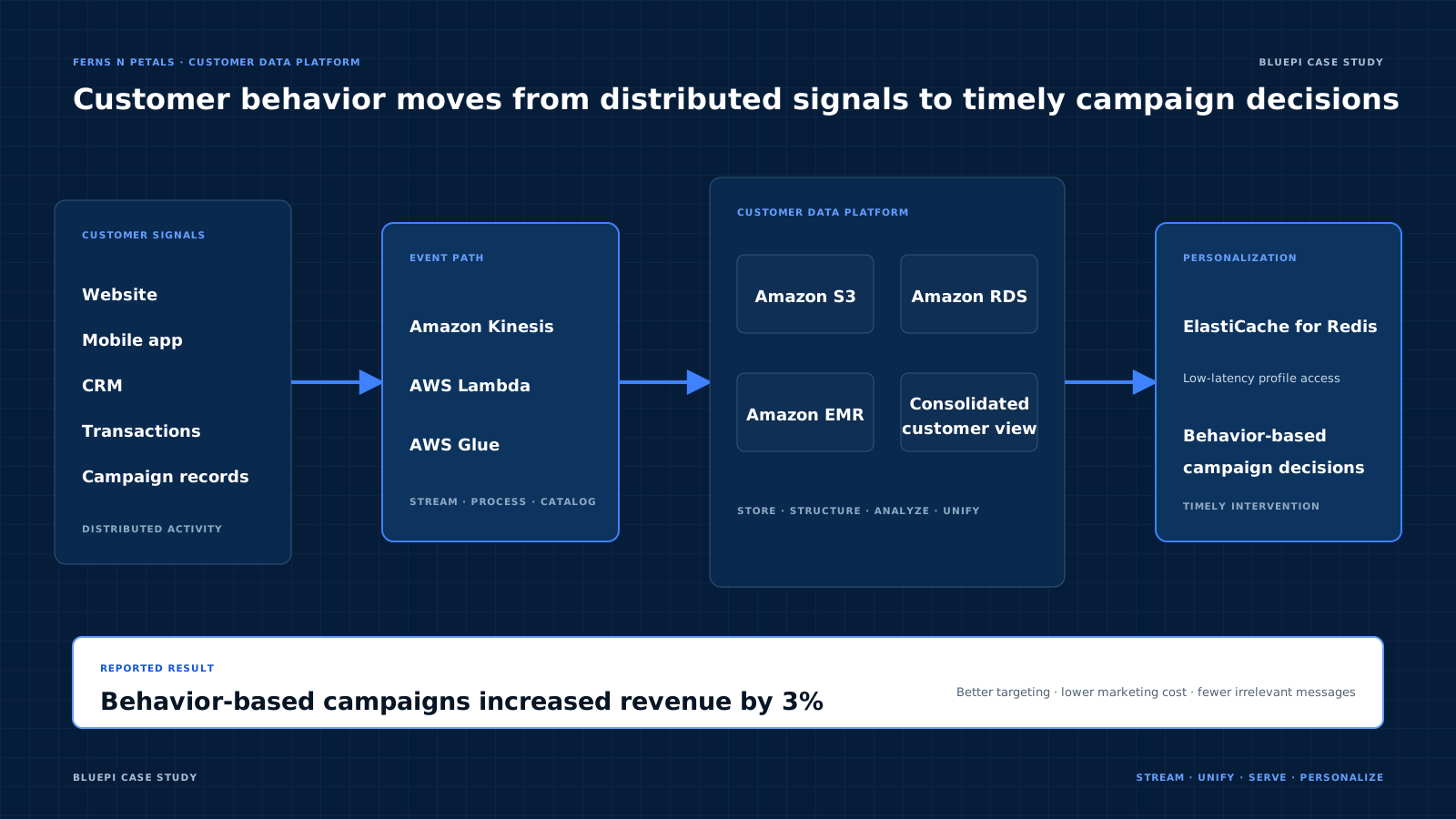
FNP needed to reduce generic campaigns by using customer behavior already available across web, app, CRM, transaction, and campaign systems. BluePi built a customer data and personalization path with AWS Lambda, EMR, Glue, S3, RDS, Kinesis, and Redis to process events and support behavior-based campaign decisions.
01 · Unified customer behavior
Website, application, CRM, transaction, and campaign data contributed to a usable customer view.
02 · Timely campaign signals
Streaming and low-latency stores supported decisions while customer behavior still had commercial relevance.
03 · Measured personalization effect
The program delivered a 3 percent revenue increase, improved campaign efficiency, and made communication more relevant to each customer.
Customer activity entered through the data path, AWS services processed events and stored profile inputs, and the personalization layer used behavior to guide campaign decisions. Revenue, response, customer fatigue, and targeting efficiency connected the decisions to outcomes.
Website, application, CRM, transaction, and campaign data contributed to a usable customer view.
Streaming and low-latency stores supported decisions while the behavior still had commercial relevance.
Revenue, response, customer fatigue, and targeting efficiency connected interventions to outcomes.
Where this pattern fits
This case is useful when campaign volume is high but customer context is scattered. BluePi can start with one behavior, one segment, and one measurable intervention.
Use these prompts to decide whether the case fits your operating problem and what a first deployment should prove.
A useful first step is to pick one high-volume behavior, one segment, and one measurable campaign decision. BluePi maps the sources that describe that behavior, the freshness each decision needs, and the measure that proves value, then builds the smallest working path that connects them.
Open a section to review the customer problem, implementation, business change, and architecture.
FNP customer activity was spread across the website, mobile app, customer relationship management (CRM) system, transactions, and campaign records. No complete customer view existed, so campaigns stayed generic. The repetition caused customer fatigue and weakened campaign results.
BluePi built a customer data platform (CDP) on AWS that brings activity together as events arrive. Amazon Kinesis streams customer activity into the platform, AWS Lambda processes events in real time, and AWS Glue catalogs and prepares the data. Amazon S3 stores the consolidated record, Amazon EMR processes large datasets for analysis, Amazon RDS manages structured customer and transaction data, and Amazon ElastiCache for Redis caches profiles in memory so personalization lookups stay fast.
Personalized campaigns based on customer behavior lifted revenue by 3 percent. Targeting became more efficient, marketing costs came down, and customers received fewer irrelevant messages.
A personalization decision has a short useful life. The platform had to act on behavior while it still carried commercial relevance, which pushed event processing and profile lookups toward streaming and in-memory serving. Every channel also had to work from the same customer record, or the fatigue problem would move between channels instead of ending.
Marketing teams stopped assembling customer context channel by channel. Campaign decisions now start from a consolidated view of behavior, and teams measure revenue, response, and customer fatigue against each intervention rather than judging sends by volume.