01 · Controlled agreement record
Negotiation, approval, amendment, and reporting behavior stayed connected to the same agreement.
Customer work · Banking and financial services
Financial-market participants needed a controlled way to create, negotiate, approve, update, and report on pre-trade FX agreements. BluePi designed a platform supporting multiple agreement types, configurable workflows, offline participants, bulk changes, risk-system integration, and GraphQL reporting.
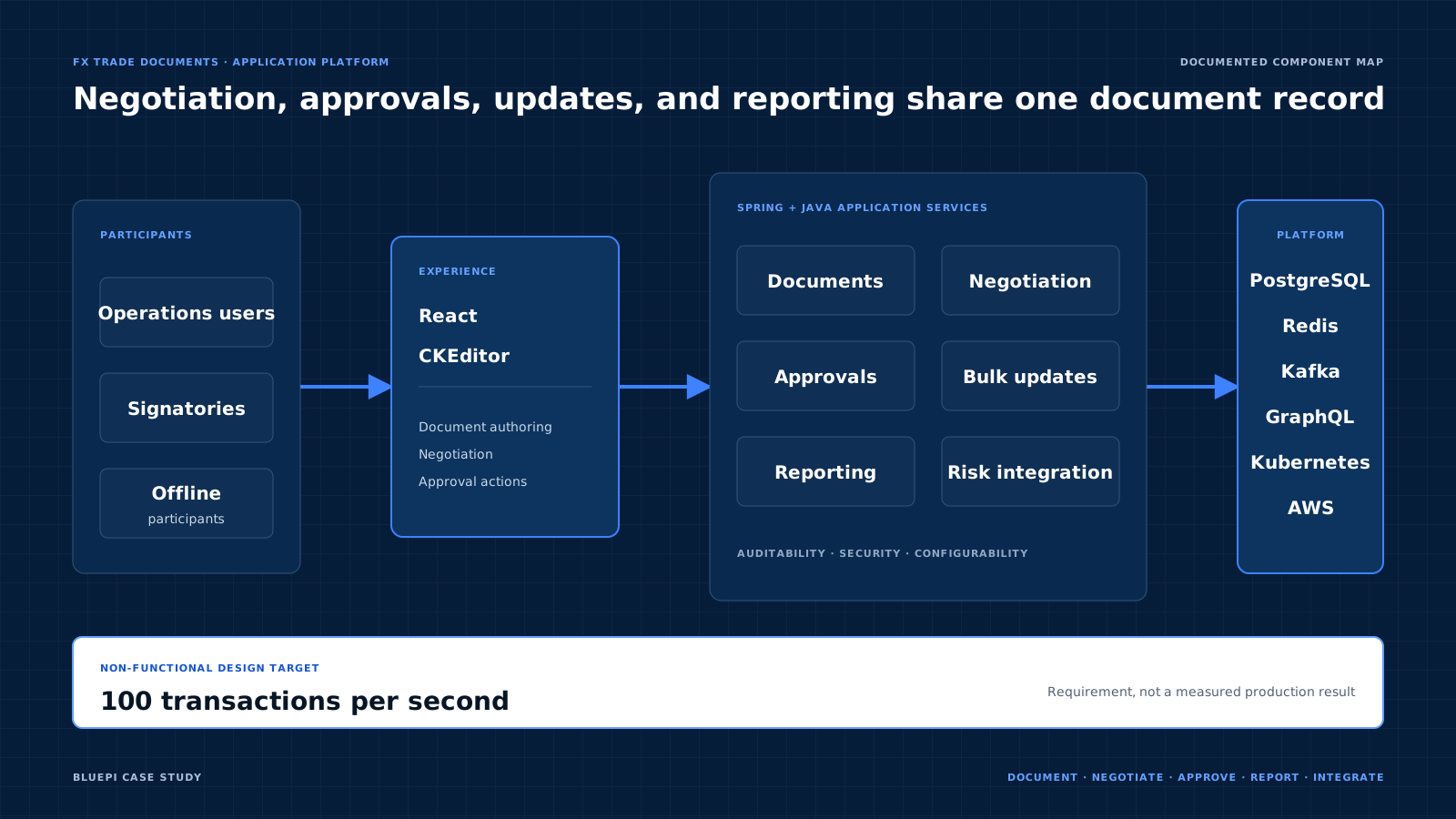
Pre-trade FX agreements carried legal terms, trading conditions, permitted products, participant capacity, and relationships across financial participants. BluePi built a platform for agreement types, participants, signatories, free-text legal terms, negotiation, approvals, offline participants, bulk updates, risk integration, and GraphQL reporting.
01 · Controlled agreement record
Negotiation, approval, amendment, and reporting behavior stayed connected to the same agreement.
02 · Configurable approval paths
Approval flows and new document types could change without creating a separate application flow.
03 · Connected risk reporting
Bulk updates, risk-management integration, GraphQL reporting, security, and auditability shared the product boundary.
BluePi implemented the platform with Spring, Java, React, CKEditor, PostgreSQL, Redis, GraphQL, Kafka, Kubernetes, and AWS. The product path represented agreement types, parties, signatories, legal text, negotiation states, approvals, offline participation, bulk changes, risk integration, and reporting, with a non-functional design target of 100 transactions per second.
Negotiation, approval, amendment, and reporting behavior remained connected to the same agreement.
Approval paths and new document types could change without creating a separate application flow.
Bulk updates, risk integration, reporting, security, and auditability shared the product boundary.
Where this pattern fits
This case is relevant when regulated agreement operations span several participants, document types, approval paths, and connected financial systems.
Use these prompts to decide whether the case fits your operating problem and what a first deployment should prove.
A first engagement can map one agreement type, its participants, negotiation states, approval path, risk integration, and reporting requirements, then implement one end-to-end controlled document flow.
Open a section to review the customer problem, implementation, business change, and architecture.
Pre-trade agreements recorded legal terms, trading conditions, permitted products, and participant capacity. Regular amendments required documents to be updated and signed again. Managing that work manually created delays and increased financial and regulatory exposure.
BluePi built one application for creating, negotiating, approving, updating, and reporting on pre-trade agreements across financial products and asset classes.
React and CKEditor supported the user experience. Spring and Java handled application behavior. PostgreSQL, Redis, Kafka, and GraphQL supported controlled state, messaging, and reporting, with Kubernetes on AWS as the documented runtime stack.
The platform was designed to a non-functional target of 100 transactions per second.
Document operations moved into one application path, allowing negotiation, approval, amendment, reporting, and integration behavior to remain connected to the same controlled document record.