
01 · Approved answer content
A structured question-and-answer set supplied responses for high-frequency support requests.
Customer work · Consumer products and support
Seventy percent of the organization’s customer queries repeated questions support executives had already answered. BluePi designed an AI-enabled chatbot using structured question-and-answer content and natural-language understanding across digital and voice channels.
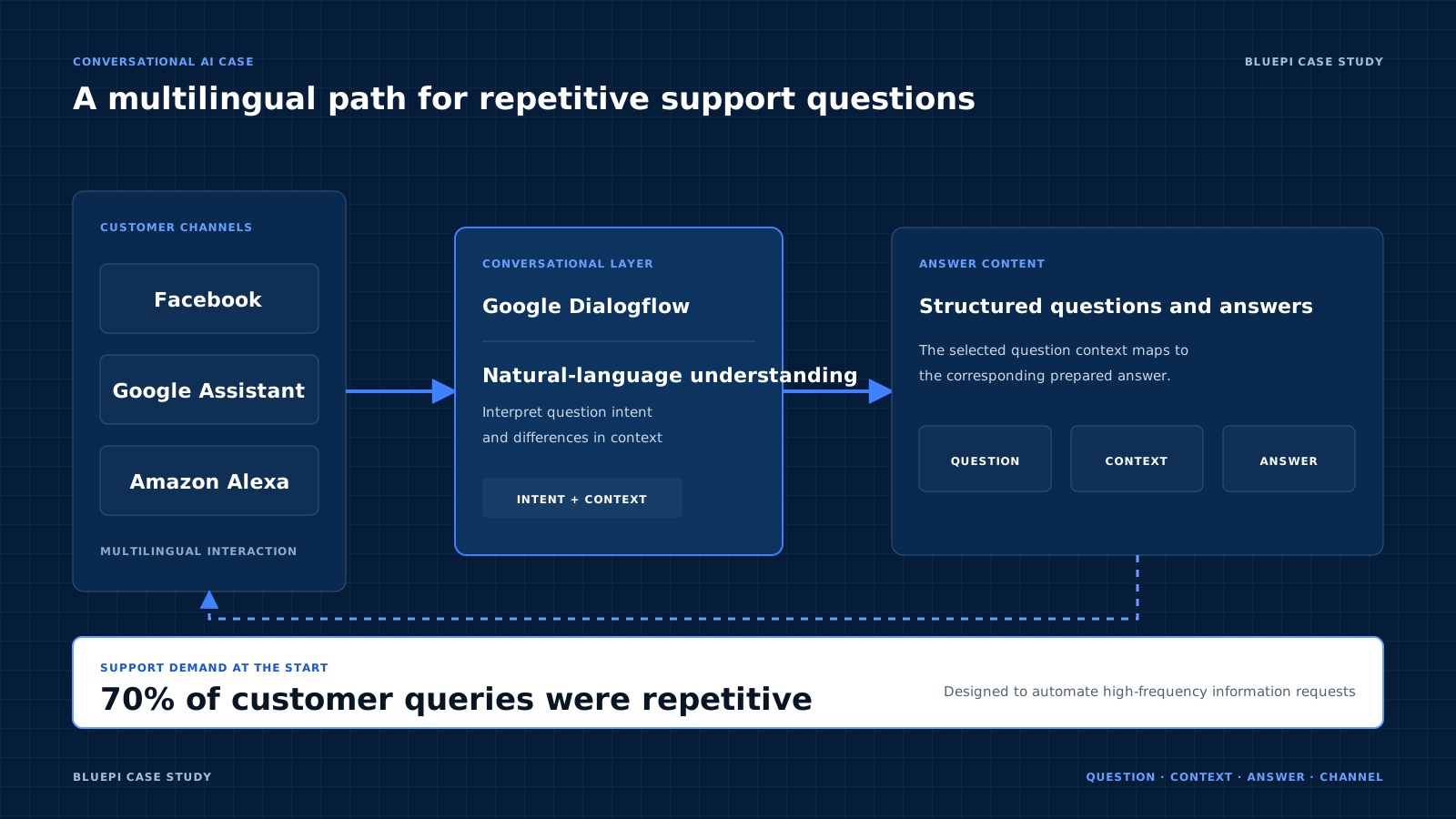
Herbalife received a growing volume of web and help-center questions, and 70 percent repeated answers support executives had already provided. BluePi designed an AI-enabled chatbot around structured question-and-answer content, natural-language understanding, and Google Dialogflow.
01 · Approved answer content
A structured question-and-answer set supplied responses for high-frequency support requests.
02 · Question context handling
Natural-language understanding mapped wording variations to the intended question context.
03 · Digital and voice scope
The proposed channel scope included Facebook tooling, Google Assistant, Amazon Alexa, and multilingual interaction.
BluePi structured repeated support questions and approved answers, used natural-language understanding to interpret variations in context, and designed the conversational path in Google Dialogflow.
A question-and-answer set provided the response content for high-frequency requests.
Natural-language understanding mapped different phrasings to the intended question context.
The design connected the conversational path to digital and voice interfaces.
Where this pattern fits
This case is relevant when repetitive information requests consume support capacity and the organization wants to make an existing answer set available through conversational channels.
Use these prompts to decide whether the case fits your operating problem and what a first deployment should prove.
A first engagement can define one high-frequency question set, structure the approved answers, map representative wording variations, connect one channel, and establish how the support team will evaluate coverage before expansion.
Open a section to review the customer problem, implementation, business change, and architecture.
Customers searched the web or contacted the help center for information. Rising call volume increased pressure on the support operation, while executives repeatedly answered the same questions.
BluePi proposed a conversational system built around a structured question-and-answer set. Natural-language understanding mapped variations in a customer’s wording to the appropriate context and response.
The design created an automated route for high-frequency information requests, intended to reduce repeated help-center handling while keeping the same answer set available across supported channels.