
Good fit
One operating workflow has a named owner, a measurable baseline, and users who can judge whether the result improves.
Measure through release
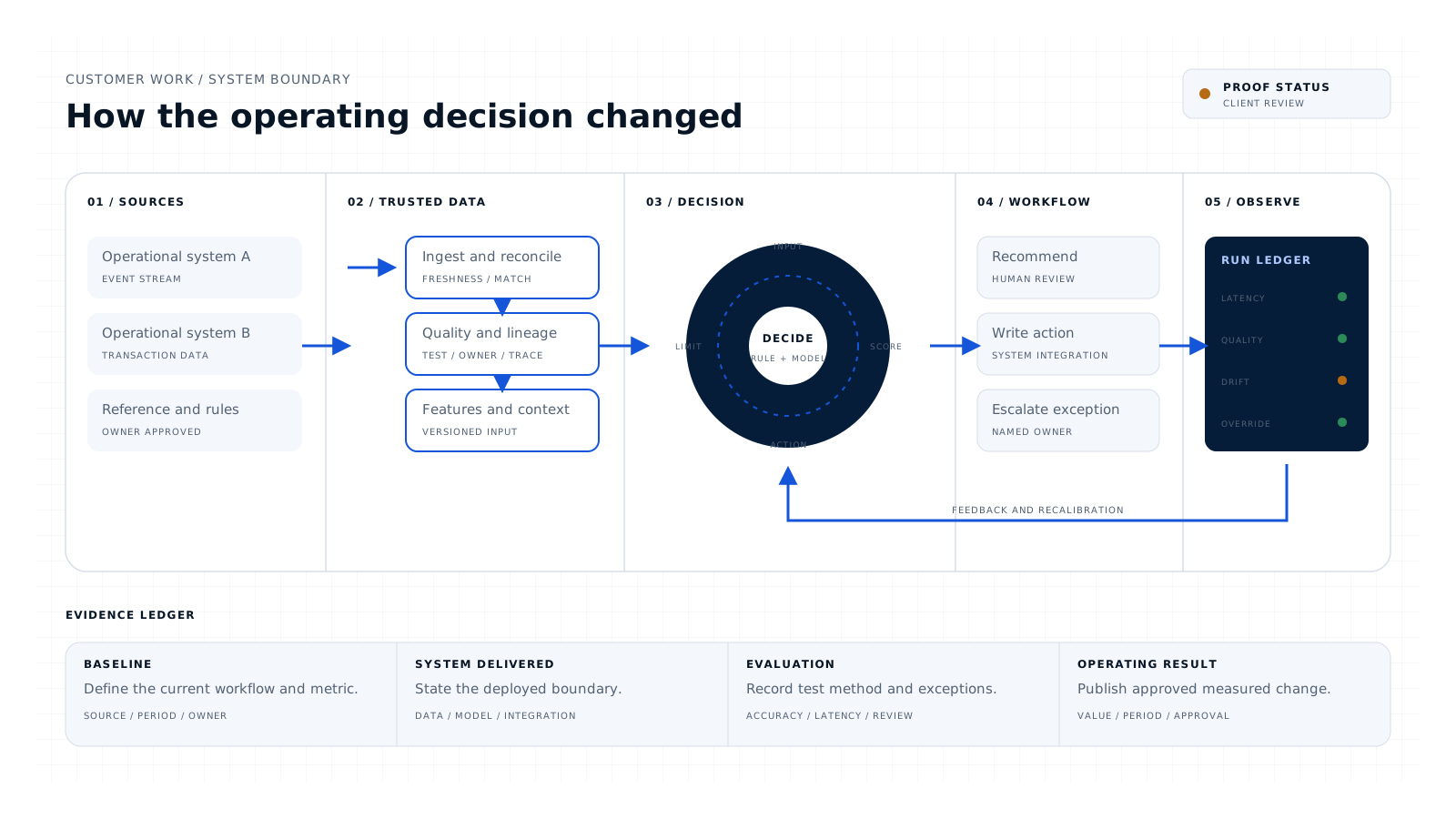
The same evidence path connects initial baseline, evaluation, release, monitoring, and operating result.
Evidence for release and investment decisions
BluePi designs evaluation around the operating decision. A forecasting system, data platform, migration, report, model, or workflow needs different evidence, but every result should remain traceable to a baseline, version, data window, and test condition.
Evaluation continues after release. Live use can reveal adoption problems, new segments, changing source behavior, performance limits, cost, or exception patterns that were not visible before launch.
When this is the right starting point
Good fit
One operating workflow has a named owner, a measurable baseline, and users who can judge whether the result improves.
Poor fit
The request is capacity-only staffing, an unowned demonstration, or a broad transformation without a first decision and finish condition.
Evidence produced during delivery
01
BluePi records the current workflow, result, measurement period, data source, calculation method, and known limitations before evaluating a replacement. The baseline may be a forecast error, report delay, manual effort, infrastructure cost, conversion rate, service time, or another operating measure.
A clear baseline prevents teams from comparing a carefully measured new system with an informal memory of the old one.
02
Acceptance covers the complete system: source data, transformations, model or business rules, software, integration, workflow, human review, latency, security, cost, and failure behavior. Test cases represent normal work, known edge cases, missing inputs, delayed data, and service failures.
The release record separates measured results from assumptions and estimated benefits. Owners can then decide whether the system is ready, needs a bounded exception, or should return to engineering.
03
Failed, unavailable, partial, stale, and accepted-with-exception states remain distinct in the evidence record. Monitoring uses the same definitions after release so teams can compare live behavior with the acceptance result.
Reviews connect technical measures to the operating outcome. A healthy service still needs attention if users bypass it, recommendations are routinely overridden, or the expected business measure does not move.
We will review the owner, the baseline, the data path, the system boundary, and the route to go-live.
Discuss one workflow