
Map purpose and collection points
Web, app, service, branch, partner, import, and historical collection paths are reviewed with the notices, fields, defaults, versions, and identities used at each point.
Choice to enforcement
BluePi connects consent decisions to identities, channels, downstream systems, enforcement, exceptions, and evidence.
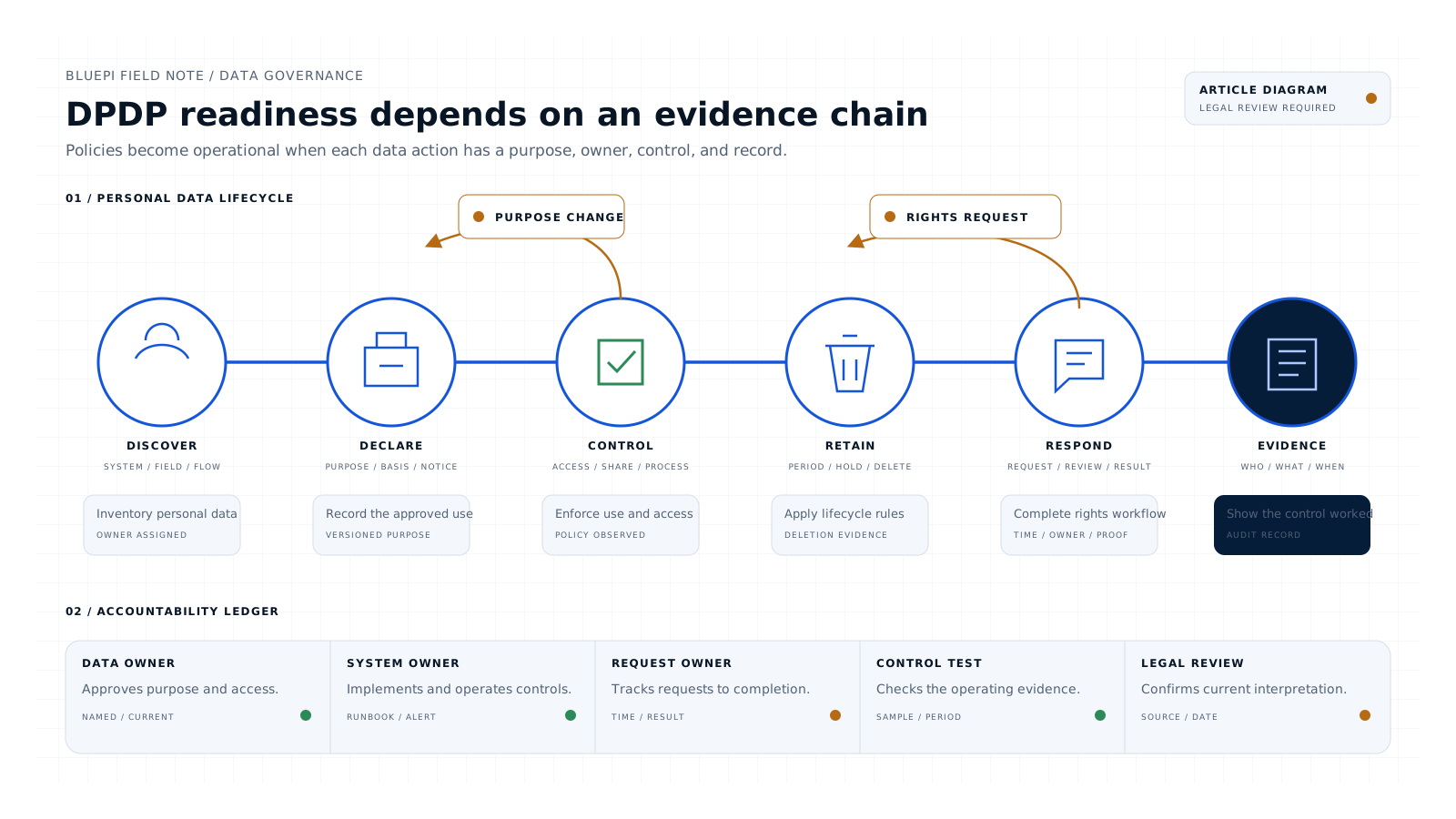
Consent records connected to actual processing
BluePi maps where consent is requested, captured, stored, changed, withdrawn, synchronized, and enforced across channels and systems. Counsel determines the legal basis and required notice or consent language.
The technical design connects each applicable purpose with the identity, version, timestamp, source, evidence, processing systems, activation points, and withdrawal behavior required to operate it.
Web, app, service, branch, partner, import, and historical collection paths are reviewed with the notices, fields, defaults, versions, and identities used at each point.
Changes and withdrawals are followed through profiles, campaigns, analytics, models, exports, downstream processors, caches, and operational systems under realistic timing and failure conditions.
Owners can identify missing, conflicting, stale, or failed consent states, route exceptions, demonstrate the version and event history, and review control performance.
When this is the right starting point
Good fit
One operating workflow has a named owner, a measurable baseline, and users who can judge whether the result improves.
Poor fit
The request is capacity-only staffing, an unowned demonstration, or a broad transformation without a first decision and finish condition.
Evidence produced during delivery
Open the part you need. Each section expands into the full delivery scope for that step.
The path covers notice, capture, identity, preferences, withdrawal, downstream propagation, enforcement, and evidence.
Testing covers channel differences, identity mismatch, delayed propagation, revoked consent, and systems that cannot enforce a decision.
Business, legal, product, data, and engineering owners agree how consent changes reach deployed systems and how failures are handled.
A recorded choice that reaches every system that uses the data. When a customer withdraws consent, the propagation to downstream profiles, campaigns, and shares is traced, enforced where possible, and evidenced where enforcement is not technically possible.
We will review the owner, the baseline, the data path, the system boundary, and the route to go-live.
Discuss one workflow