
01 · Unreliable Oracle reporting
Nearly 30 percent of reports failed to meet performance expectations. Delayed data, slow downloads, and report failures made critical information unreliable during peak use.
Customer work · Manufacturing
The manufacturer’s Oracle warehouse and OBIEE reporting path suffered downtime, delayed data, peak-period failures, and weak integration. BluePi migrated the warehouse to Snowflake, replaced OBIEE with Power BI, integrated SAP finance, and added continuous Fivetran replication.
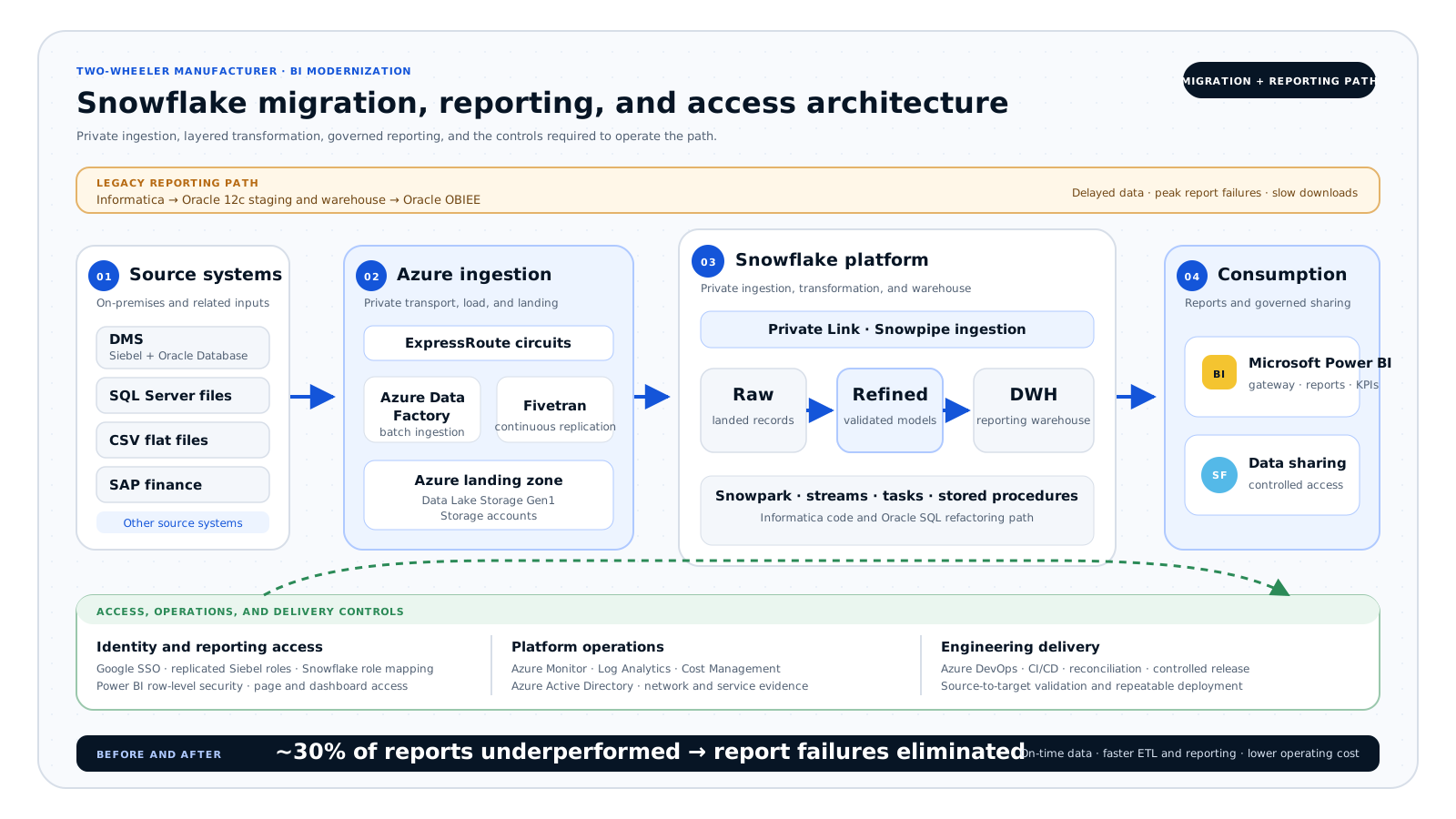
The Oracle warehouse and OBIEE reporting path produced delayed data, slow downloads, and report failures during peak use. BluePi moved the warehouse to Snowflake, replaced OBIEE with Power BI, integrated SAP finance, and added continuous Fivetran replication.
01 · Unreliable Oracle reporting
Nearly 30 percent of reports failed to meet performance expectations. Delayed data, slow downloads, and report failures made critical information unreliable during peak use.
02 · Snowflake and Power BI path
A Snowflake warehouse received continuously replicated data through Fivetran, integrated SAP finance, applied reconciliation and access controls, and served reporting through Microsoft Power BI.
03 · On-time reporting
The new platform eliminated report failures, delivered data on time, improved ETL and reporting, and reduced maintenance and operating cost.
BluePi validated data migration, continuous replication, SAP finance integration, reconciliation, and Power BI reporting before the legacy Oracle and OBIEE path was retired.
ExpressRoute provided the private network path. Azure Data Factory and Fivetran moved DMS, SQL Server, CSV, SAP, and related source data into the landing and Snowflake paths.
Raw, refined, and warehouse layers used Snowpipe, Snowpark, streams, and tasks before reporting or data sharing consumed the result.
Google single sign-on, replicated Siebel role data, Snowflake role mapping, and Power BI row-level security kept data and report access aligned.
Where this pattern fits
This case is relevant when a data platform technically runs but critical workloads remain unreliable. BluePi can assess the highest-value report paths and identify the source, platform, query, and operating constraints behind them.
Open a section to review the customer problem, implementation, business change, and architecture.
Nearly 30 percent of reports failed to perform as expected. Critical reports became unavailable during peak demand, data updates arrived late, and the platform could not reliably connect related internal sources.
BluePi migrated the on-premises Oracle warehouse to Snowflake, replaced Oracle OBIEE with Microsoft Power BI, integrated SAP finance, added Fivetran continuous replication, and modernized reconciliation, security, and authentication controls.
Report failures were eliminated, data became available on time, ETL and reporting became faster, maintenance and operating cost decreased, and users gained current KPI access.
DMS data from Siebel and Oracle, SQL Server files, CSV files, SAP, and related sources entered the Azure environment through ExpressRoute. Azure Data Factory and Fivetran loaded the landing path before Private Link connected it to Snowflake. Raw, refined, and warehouse layers used Snowpipe, Snowpark, streams, and tasks. Power BI and Snowflake data sharing served consumption, while monitoring, CI/CD, single sign-on, role mapping, and row-level security controlled the operating path.
Business teams received on-time data and reliable reports during peak periods. Finance and operating KPIs stayed current, while faster ETL and reporting and lower maintenance cost reduced the burden of the legacy platform.