
Workload contract
Connect sources, code, data structures, schedules, consumers, rules, service levels, access, quality, incidents, cost, dependencies, and owners before treatment and wave planning.
Estate to operating platform
BluePi modernizes warehouse, lake, integration, analytics, and operating workloads in measured stages. Each workload retains its dependencies, business meaning, treatment decision, validation contract, cutover state, rollback path, operating owner, and unit-cost evidence.
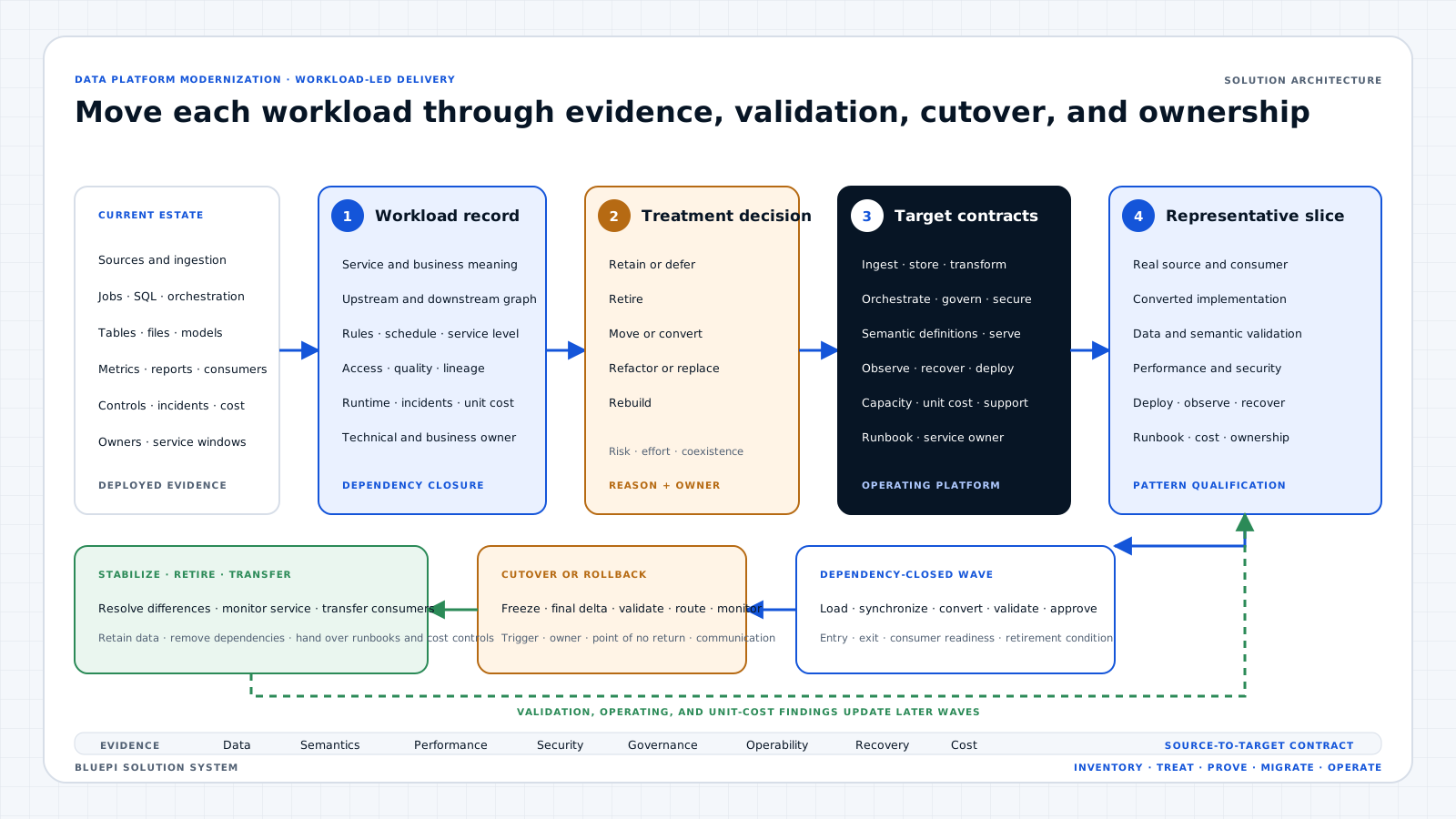
Modernization guided by workload and dependency evidence
BluePi assesses the current platform through deployed workloads, dependencies, business meaning, service behavior, controls, incidents, support effort, cost, and operating calendar.
Each workload receives a treatment, target contract, validation method, wave, cutover state, rollback path, retirement condition, and operating owner.
Connect sources, code, data structures, schedules, consumers, rules, service levels, access, quality, incidents, cost, dependencies, and owners before treatment and wave planning.
Independently test data, semantics, performance, security, governance, operability, deployment, recovery, and cost against the current baseline and target acceptance criteria.
Record synchronization, freeze, final validation, approval, routing, rollback, stabilization, retirement, runbooks, support, and the named owner of the target service.
When this is the right starting point
Good fit
One operating workflow has a named owner, a measurable baseline, and users who can judge whether the result improves.
Poor fit
The request is capacity-only staffing, an unowned demonstration, or a broad transformation without a first decision and finish condition.
Evidence produced during delivery
Open the part you need. Each section expands into the full delivery scope for that step.
Modernization starts with deployed workloads and the services they provide. The inventory connects sources, ingestion, transformation, orchestration, storage, semantic models, reports, data-science dependencies, users, roles, quality, lineage, service levels, incidents, performance, capacity, support effort, cost, upstream and downstream dependencies, and technical and business owners.
Each workload receives a documented treatment and reason. Object counts remain supporting evidence, while wave planning follows service and dependency boundaries.
The target architecture specifies the services workloads can depend on: onboarding and ingestion, batch and event patterns, storage zones and formats, transformation, orchestration, metadata, lineage, quality, identity and access, semantic definitions, serving, observability, recovery, deployment, capacity, unit cost, ownership, and service expectations.
Representative workloads test the target pattern with real sources, transformation logic, business meaning, access, quality, serving, performance, deployment, monitoring, cost, and operating ownership. The slice produces source-to-target mapping, converted implementation, reconciliation, performance and security evidence, deployment and rollback procedures, a runbook, and exceptions that refine later estimates.
Each wave records included workloads, dependency closure, owners, entry and exit criteria, freeze points, initial load, ongoing synchronization, conversion sequence, validation roles, consumer readiness, cutover window, rollback trigger, stabilization period, and retirement conditions.
Validation independently covers data equivalence, business and semantic equivalence, performance and service behavior, security and governance, operability, and cost.
The cutover runbook records freeze and synchronization, final delta, validation checkpoint, user approval, routing change, monitoring, rollback trigger, decision owner, and communication. Rollback remains executable until the agreed point of no return.
After cutover, the team monitors differences, failures, performance, capacity, security, adoption, and cost through stabilization. Source workloads retire only after dependencies are removed, retention needs are addressed, consumers are transferred, and the decision is recorded. Repositories, reconciliation evidence, runbooks, dashboards, support procedures, cost controls, and known exceptions transfer to named owners.
Modernization covers the current workload and dependency record, workload treatment, target platform contracts, representative slices, wave planning, conversion, coexistence, validation, cutover, rollback, stabilization, source retirement, cost evidence, and operating transfer.
Each dependency-closed wave has entry and exit criteria, synchronization, separate data and semantic and performance and security validation, consumer approval, an executable rollback path, a stabilization window, and recorded retirement conditions.
Start with one representative workload family with known owners and consumers. Build its dependency record, choose a treatment, define target contracts, prove the target slice, reconcile source and target behavior, and exercise cutover, rollback, and operating ownership.
We will review the owner, the baseline, the data path, the system boundary, and the route to go-live.
Plan the migration path