
01 · Hour-lag warehouse updates
Operational updates took about an hour to reach the analytical warehouse. Reducing the delay through the existing platform would have increased cost, while long SQL procedures were difficult to maintain and optimize.
Customer work · Logistics
BluePi built a Google Cloud MVP that captured changes from MySQL, PostgreSQL, and MongoDB with Debezium Server. Optimized BigQuery procedures made current operational data available for reporting at a lower cost and shorter runtime.
The existing warehouse path made near-real-time data expensive to provide. Complex SQL procedures had also accumulated over time, which increased runtime and made repeated optimization difficult. BluePi used a bounded MVP to test a lower-cost CDC and BigQuery path.
01 · Hour-lag warehouse updates
Operational updates took about an hour to reach the analytical warehouse. Reducing the delay through the existing platform would have increased cost, while long SQL procedures were difficult to maintain and optimize.
02 · CDC and BigQuery path
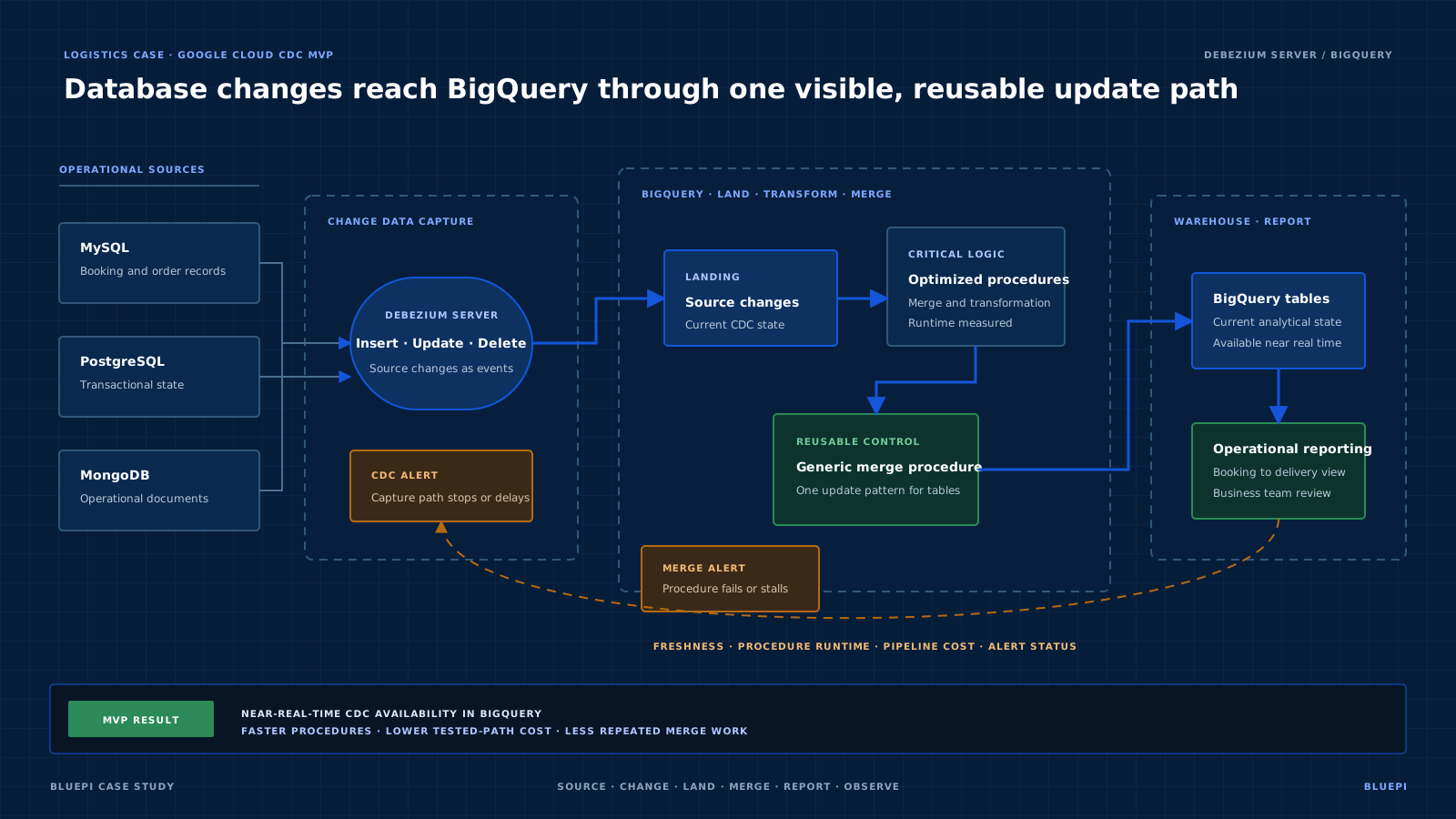
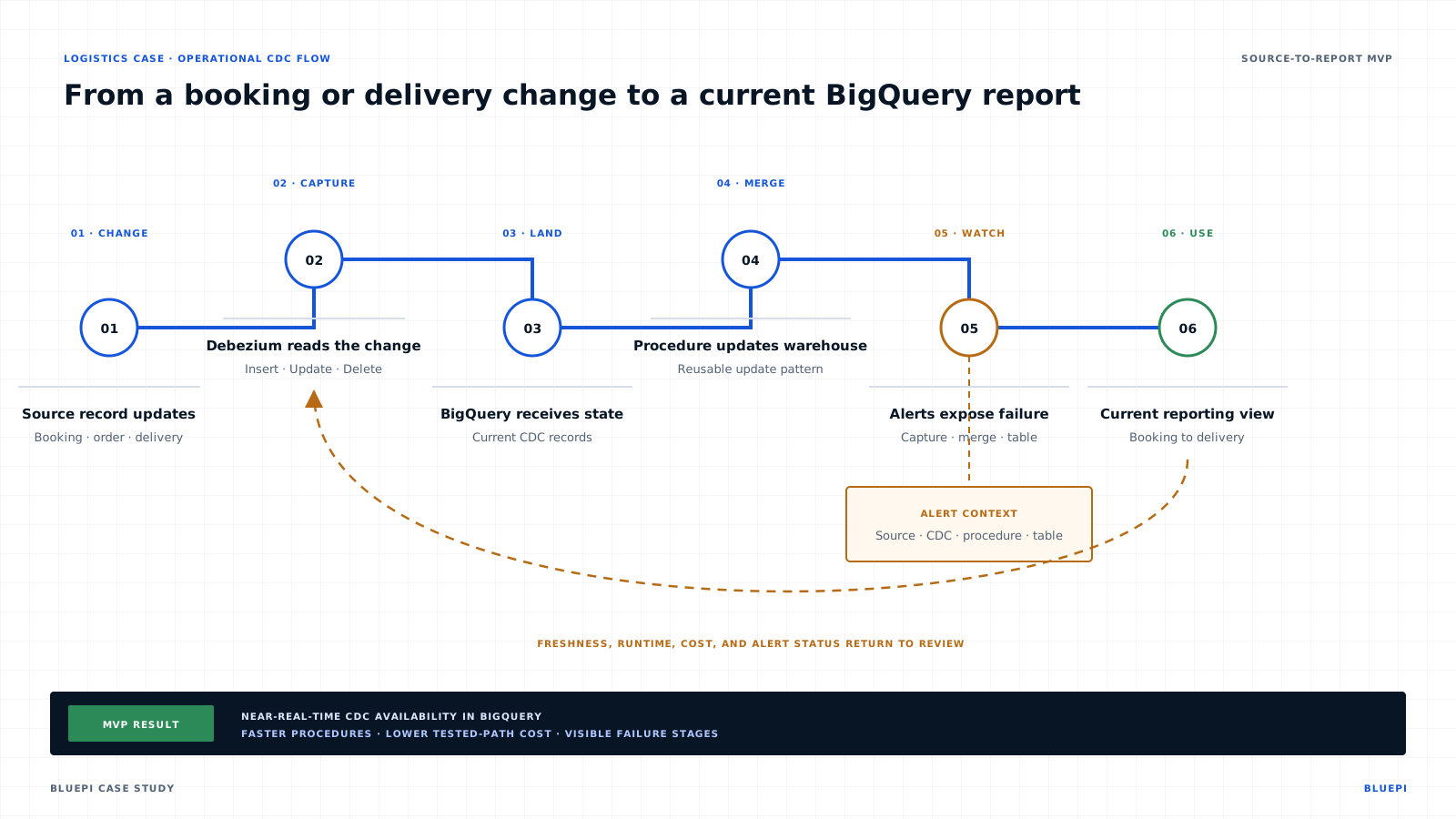
Debezium Server captured changes from MySQL, PostgreSQL, and MongoDB. BigQuery stored the updated data, and optimized procedures applied the merge and transformation logic required by reporting teams.
03 · Current data with lower processing cost
The MVP established near-real-time CDC availability in BigQuery. Procedure optimization improved runtime, native BigQuery capabilities reduced cost, and a reusable merge procedure reduced repeated development and testing work.
Debezium captured changes from MySQL, PostgreSQL, and MongoDB, BigQuery stored the current records, and optimized procedures applied the merge and transformation logic required by reporting teams.
Debezium Server read database changes instead of repeatedly extracting complete tables. This reduced the work required to keep BigQuery current.
A reusable merge procedure applied a consistent update pattern across tables. Development, testing, and later optimization followed the same implementation.
Alerts identified the stage where data stopped moving. The team could respond to a source, CDC, procedure, or warehouse problem without treating every freshness issue as the same incident.
Where this pattern fits
This pattern fits operations teams that need fresher warehouse data but face rising platform cost or long-running transformation procedures. A useful first step is a bounded set of tables and one critical procedure with measurable latency, runtime, and cost baselines.
Open a section to review the customer problem, implementation, business change, and architecture.
The logistics platform needed operational updates to reach reporting sooner and at a sustainable cost.
BluePi implemented a bounded CDC and BigQuery MVP.
The MVP demonstrated that operational changes could reach BigQuery in near real time while reducing warehouse cost and procedure runtime.