
Good fit
One operating workflow has a named owner, a measurable baseline, and users who can judge whether the result improves.
Event to network action
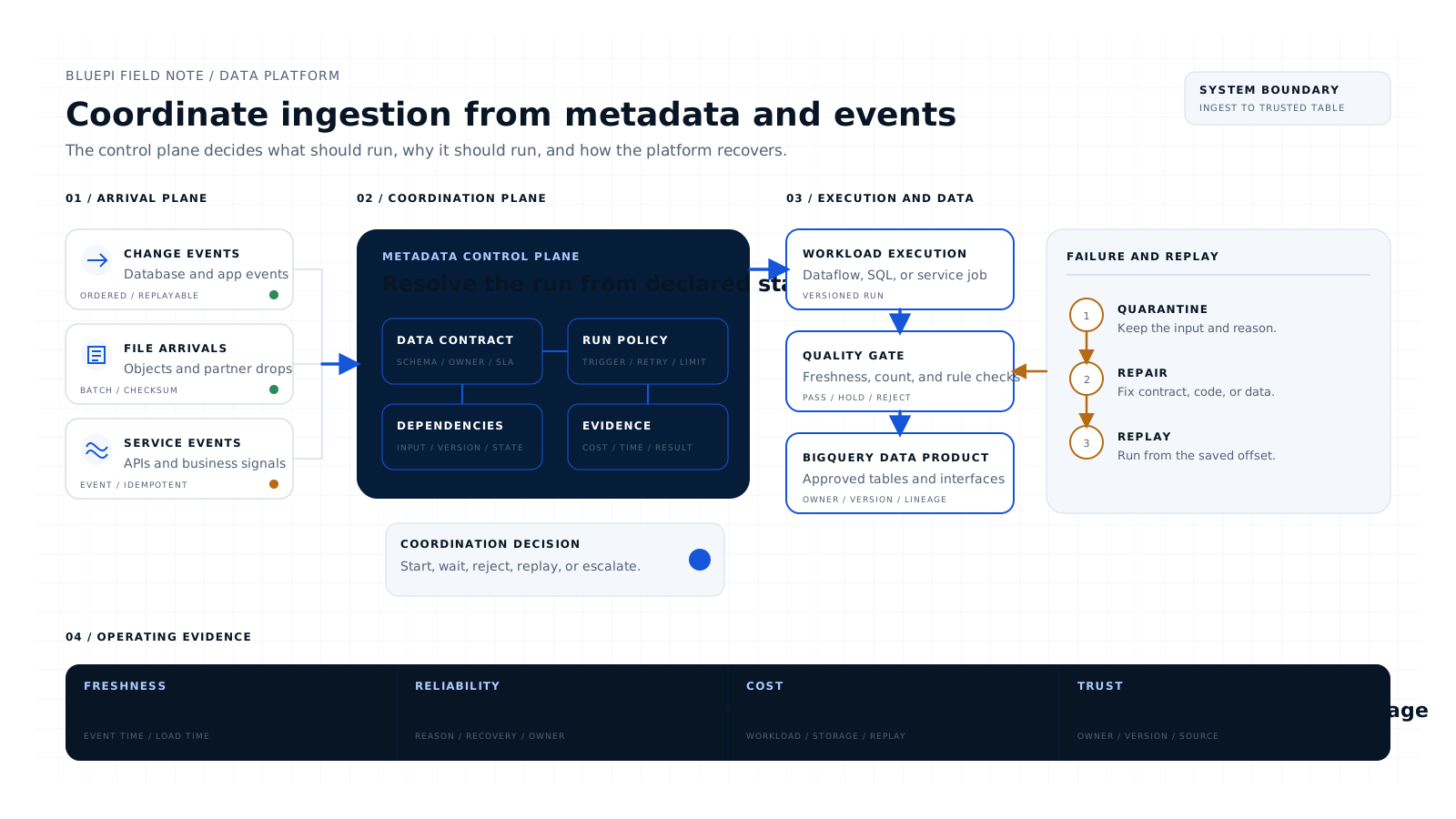
Logistics decisions depend on fresh events from many operational systems and a reliable path through delays, duplicates, and replay.
Logistics data and decision systems
BluePi’s logistics work includes Delhivery’s large-scale data and real-time reporting platform, DTDC’s operational management information system (MIS), cloud migration, change data capture, and analytical modernization.
Logistics data arrives from many systems and locations under constant change. Useful platforms must handle delayed events, duplicates, schema changes, replay, backfill, reconciliation, and the service expectations of operational users.
When this is the right starting point
Good fit
One operating workflow has a named owner, a measurable baseline, and users who can judge whether the result improves.
Poor fit
The request is capacity-only staffing, an unowned demonstration, or a broad transformation without a first decision and finish condition.
Evidence produced during delivery
01
BluePi builds change data capture, event processing, operational metrics, planning data, platform migration, and cost controls.
02
The system handles delayed sources, duplicates, schema changes, replay, reconciliation, and clear incident ownership.
03
Customer work includes DTDC and Delhivery, spanning Google Cloud delivery and earlier AWS logistics programs.
We will review the owner, the baseline, the data path, the system boundary, and the route to go-live.
Discuss one workflow