
01 · Two-day runtime evidence
Monitoring the live behavior established useful evidence inside the constraints of the packaged application.
Customer work · Quick-service restaurants
Pizza Hut’s online ordering application had suffered slow page loads for four months. BluePi monitored the running system for two days, isolated session management in the web tier as the focused intervention, and validated the change under concurrent load.
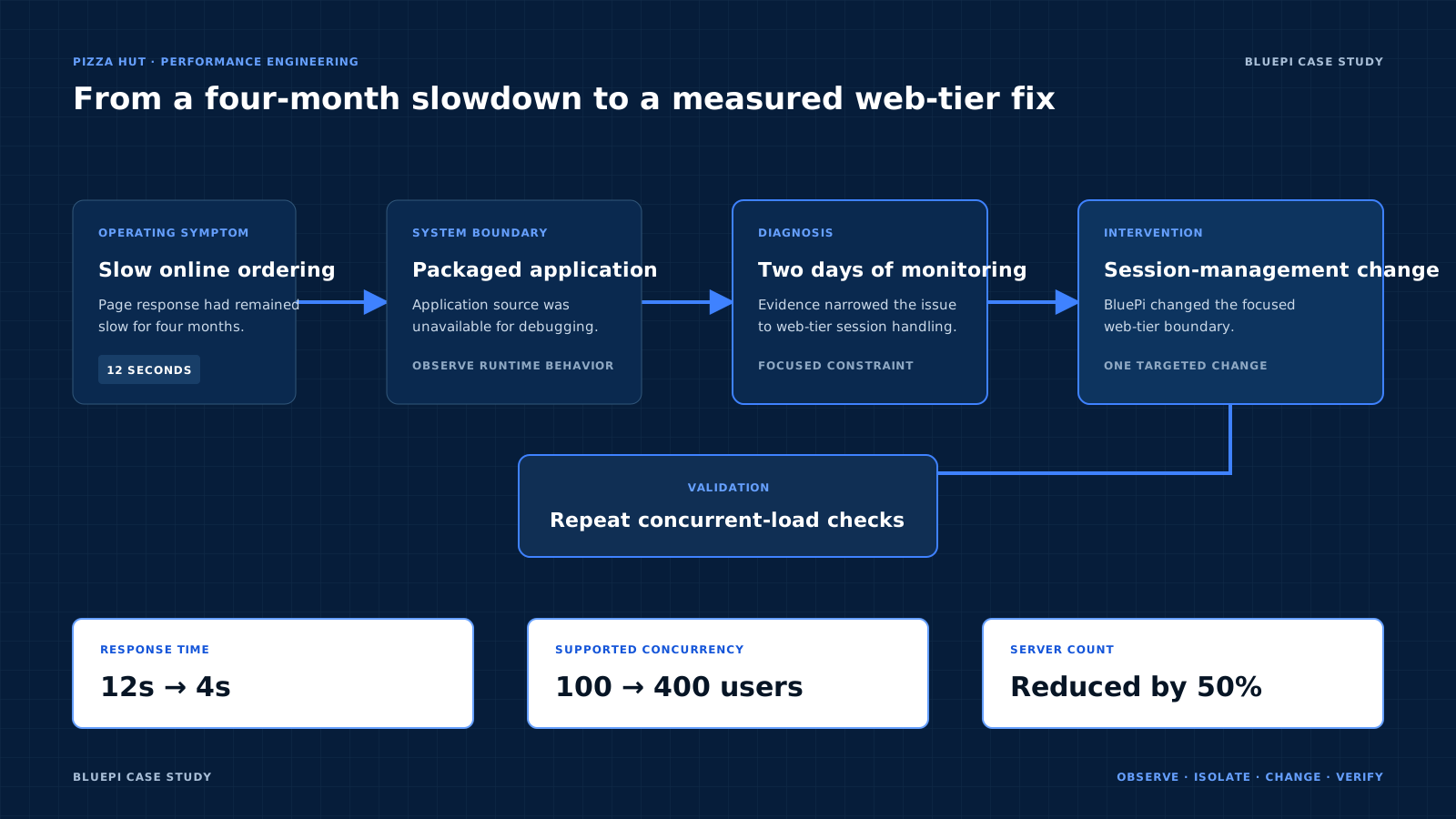
Pizza Hut’s online ordering application had been slow for four months, and packaged software limited source-level debugging. BluePi monitored the running system, isolated web-tier session management, changed that boundary, and validated the application under concurrent load.
01 · Two-day runtime evidence
Monitoring the live behavior established useful evidence inside the constraints of the packaged application.
02 · Session-management intervention
BluePi focused the change on web-tier session management instead of adding broad infrastructure.
03 · Concurrent-load validation
Response time improved from 12 seconds to 4 seconds, supported concurrency increased from 100 to 400 users, and the required server count fell by 50 percent.
BluePi reproduced the performance issue, monitored the running packaged application for two days, changed the web-tier session boundary, and tested the updated system against the same concurrent-load condition.
Two days of monitoring established evidence within the packaged application boundary.
The intervention focused on web-tier session management rather than adding broad infrastructure.
The updated application was checked against the operating condition that had exposed the constraint.
Where this pattern fits
This case is relevant when a packaged application is slow, source-level debugging is unavailable, and the team needs a measured route from symptom to focused change.
Use these prompts to decide whether the case fits your operating problem and what a first deployment should prove.
A first engagement can reproduce one user-visible performance problem, record the baseline, observe the running system, test one focused intervention, and validate the result under the same operating condition.
Open a section to review the customer problem, implementation, business change, and architecture.
Slow page loads were limiting use of Pizza Hut’s online ordering site. The issue had persisted for four months, and the technical team had not identified a cause. The packaged application also prevented source-level debugging.
BluePi observed the running application for two days and narrowed the problem to session handling in the web tier. The team made a focused session-management change, then repeated concurrent-load checks against the updated system.
The focused intervention resolved the long-running performance constraint while improving user response, supported concurrency, and infrastructure efficiency.