
Good fit
One operating workflow has a named owner, a measurable baseline, and users who can judge whether the result improves.
Store-hour decisions
Quick-service restaurant (QSR) operations combine short planning cycles, local demand, promotions, menu availability, store differences, and sharp peaks.
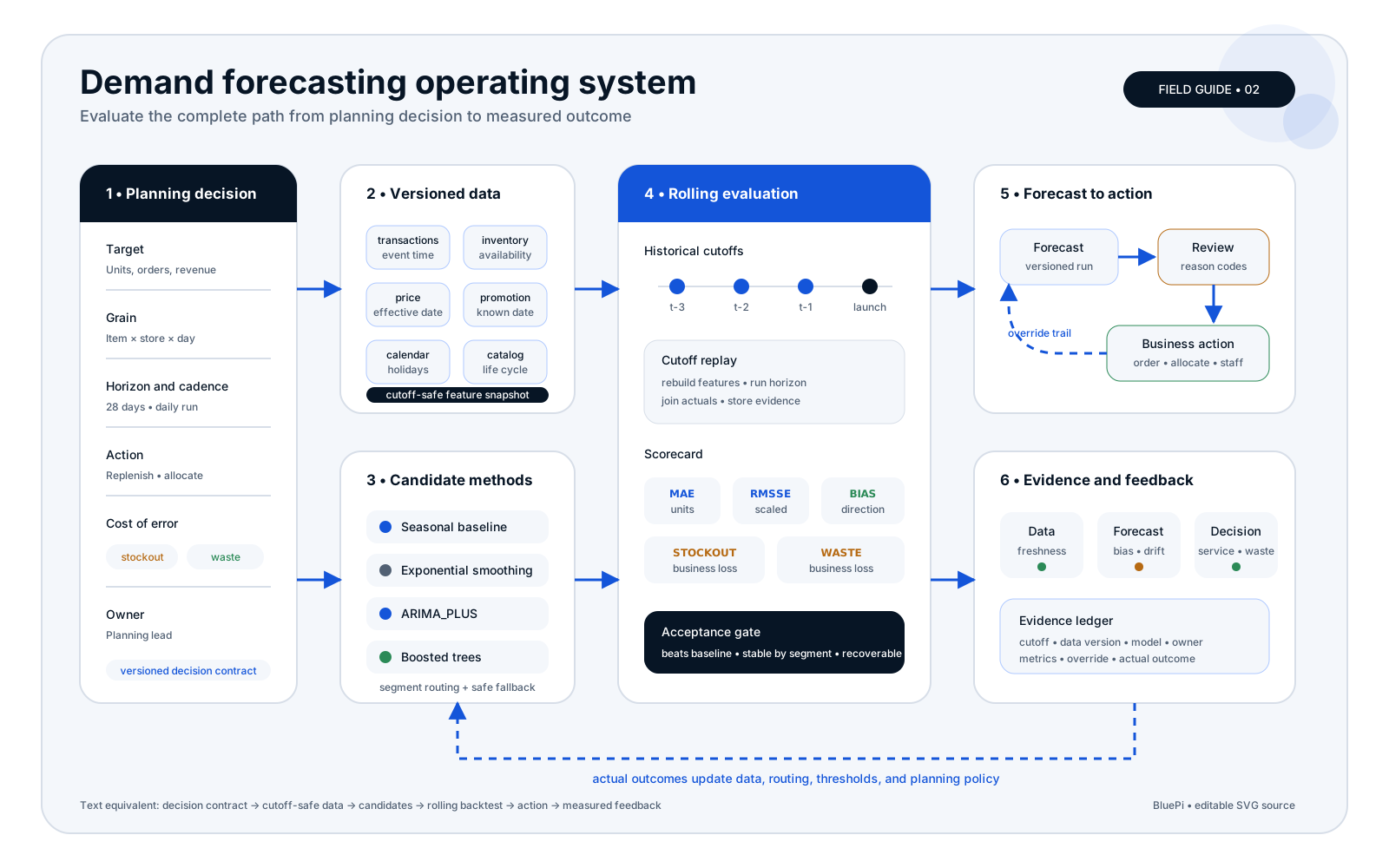
Quick-service restaurant systems
BluePi’s quick-service restaurant work includes hourly forecasting, Snowflake data platforms, executive intelligence, store analytics, cloud migration, recovery planning, and delivery for KFC India and other restaurant operators.
Restaurant decisions combine local demand, store and menu availability, promotions, calendar effects, supply, labor, and sharp trading peaks. Systems must present a useful signal within a short planning window.
When this is the right starting point
Good fit
One operating workflow has a named owner, a measurable baseline, and users who can judge whether the result improves.
Poor fit
The request is capacity-only staffing, an unowned demonstration, or a broad transformation without a first decision and finish condition.
Evidence produced during delivery
01
Forecasting can support preparation or ordering by hour, day, store, or item. The measure reflects the decision and the cost of error.
02
Sales, supply, labor, store, promotion, and external signals enter one governed data path.
03
Customer work includes hourly demand forecasting, executive intelligence, operating analytics, and earlier cloud-migration programs.
We will review the owner, the baseline, the data path, the system boundary, and the route to go-live.
Discuss one workflow