
01 · KPI definition record
Each measure received a definition, grain, source, transformation, freshness expectation, and accountable owner.
Customer work · Real estate
Housing’s data and reports were distributed across departmental systems, leaving teams with conflicting KPI definitions and limited access. BluePi consolidated the data in Snowflake, standardized KPIs, and introduced role-based access and cataloguing.
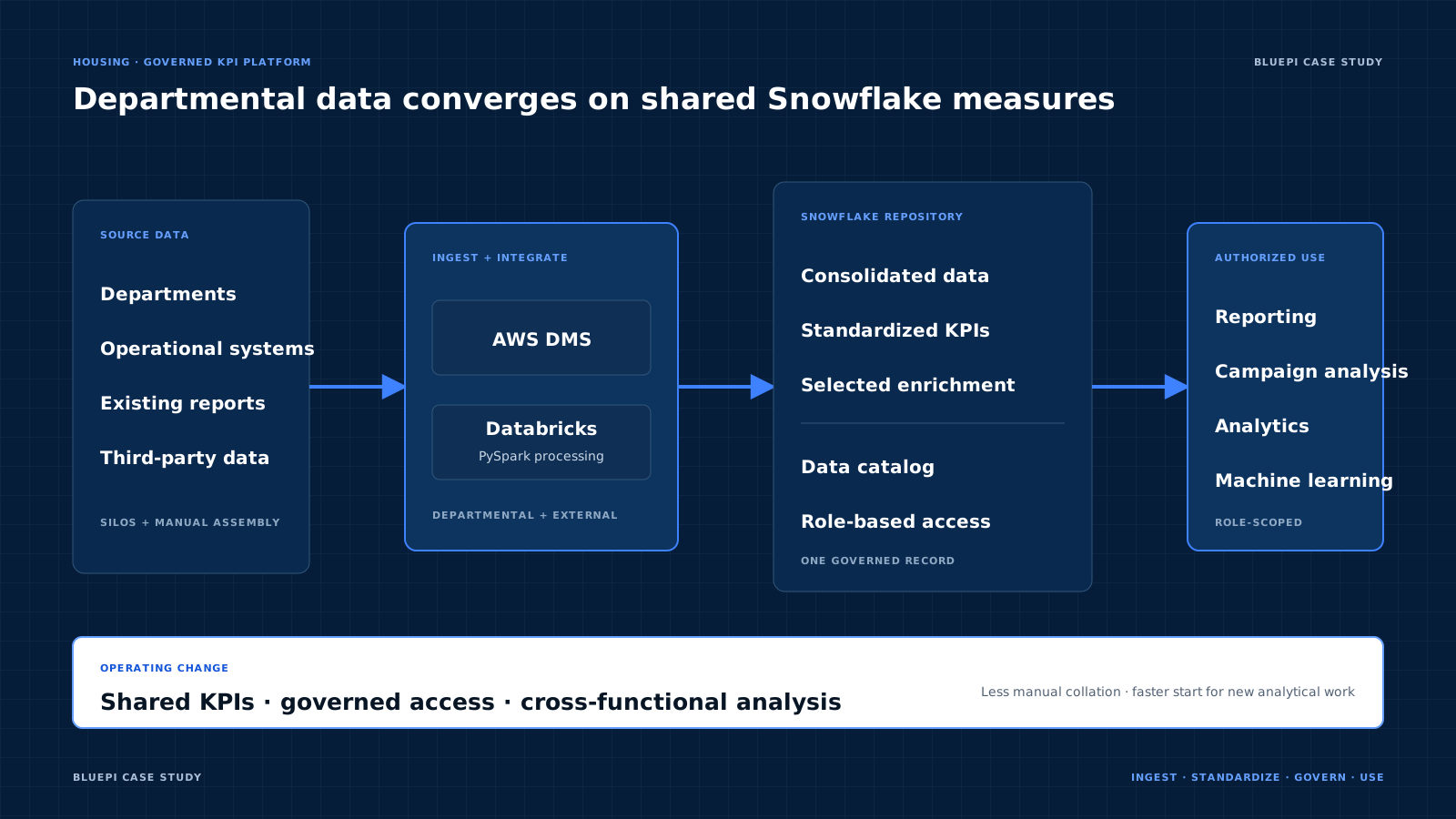
The real-estate search portal needed teams to work from common KPI definitions, lineage, grain, and access paths instead of repeated manual consolidation. BluePi consolidated data in Snowflake, standardized measures, enriched selected data, and introduced governed access and cataloguing.
01 · KPI definition record
Each measure received a definition, grain, source, transformation, freshness expectation, and accountable owner.
02 · Governed discovery
Role-based access and a data catalogue helped users find approved data while protecting restricted information.
03 · Reusable processing tiers
AWS Data Migration Service, Databricks, and PySpark supported ingestion and processing for reporting, exploration, and AI or machine-learning use.
BluePi moved data through AWS Data Migration Service, processed it with Databricks and PySpark, consolidated it in Snowflake, standardized KPI definitions, and exposed approved data through role-based access and cataloguing.
Each KPI required a definition, grain, source, transformation, freshness expectation, and accountable owner.
Role-based controls and a data catalogue helped users find approved data while protecting restricted information.
Processing tiers served reporting, exploration, and AI or machine-learning use without duplicating every source path.
Where this pattern fits
This case is relevant when data access has expanded but trust in cross-functional metrics has not. BluePi can start with a small set of decisions and trace their KPIs to the underlying data products.
Open a section to review the customer problem, implementation, business change, and architecture.
Departmental systems produced separate reports and measures. Analysts manually collated data, leaders lacked a complete business view, and teams could not consistently find or use the data required for cross-functional work.
BluePi used AWS Database Migration Service and Databricks with PySpark to integrate departmental and selected third-party sources in Snowflake. Shared KPI definitions, role-based access, and a data catalog governed how teams found and used the data.
Teams gained one governed platform and shared KPI definitions. Cross-functional analysis and campaign work could start from the same measures, while role-based access made relevant data available beyond the small group that previously assembled reports manually.
Departmental and selected third-party sources moved through AWS DMS and Databricks with PySpark into Snowflake. Standardized KPI definitions and the data catalog sat over the governed repository, while role-based access controlled reporting, campaign analysis, and machine-learning workloads.
Manual assembly stopped being the only route to a cross-functional view. Teams could find governed data within their roles, compare measures from shared definitions, and begin new analysis without rebuilding the same departmental extracts.