Platform contract
Define environments, network paths, identity, secrets, encryption, policy, deployment, audit, backup, recovery, regional needs, and the owners of platform code and change.
Consumer contract to operating platform
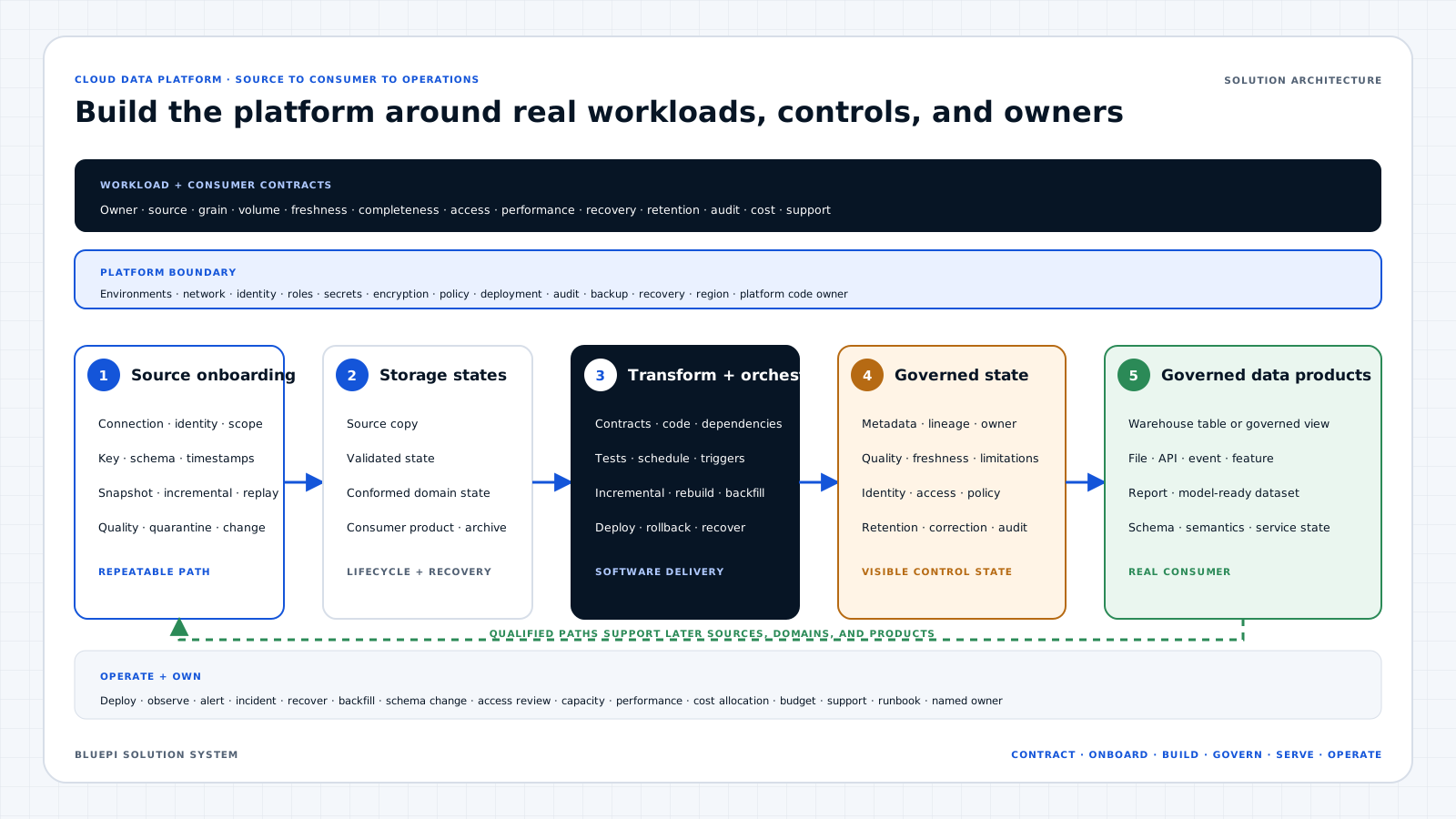
BluePi designs and builds cloud data platforms around real consumers and workload service levels. The first production slice connects source onboarding, storage, transformation, quality, governance, serving, deployment, observability, recovery, cost, and operating ownership.
A cloud data platform designed around real consumers
BluePi starts with the workloads and consumers the platform must serve. Their freshness, quality, access, performance, recovery, retention, cost, and support needs set the architecture boundary.
The first production slice proves source onboarding, storage, transformation, governance, serving, deployment, monitoring, recovery, and ownership with real data and a real consumer.
Define environments, network paths, identity, secrets, encryption, policy, deployment, audit, backup, recovery, regional needs, and the owners of platform code and change.
Publish key, grain, schema, semantics, source, lineage, freshness, completeness, quality, access, correction behavior, retention, owner, service expectation, and support.
Exercise deployment, rollback, backfill, schema change, access review, incident response, recovery, performance, capacity, cost review, and support ownership before handover.
When this is the right starting point
Good fit
One operating workflow has a named owner, a measurable baseline, and users who can judge whether the result improves.
Poor fit
The request is capacity-only staffing, an unowned demonstration, or a broad transformation without a first decision and finish condition.
Evidence produced during delivery
Open the part you need. Each section expands into the full delivery scope for that step.
Architecture starts with the workloads the platform must support. Each analytical, reporting, operational, migration, or AI workload records its business and technical owners, sources, consumers, data grain, volume, freshness, completeness, query or model behavior, availability, recovery, retention, security, audit, cost, critical windows, and support path.
The platform foundation defines environment separation, account or project structure, network paths, human and service identity, least-privilege roles, secrets, encryption, policy enforcement, deployment, audit, approved connectivity, backup, recovery, and regional requirements. Infrastructure and platform code have named owners and an environment-promotion path.
Every source receives a contract for ownership, connection, authentication, scope, keys, schema, snapshot and incremental behavior, timestamps, volume, freshness, completeness, deletes, corrections, replay, classification, retention, quality, quarantine, schema change, operations, and cost.
Storage states distinguish source copy, validated data, conformed domain data, consumer-ready products, temporary processing state, and retained archive. Each state defines schema, format, partitioning, ownership, access, promotion criteria, lineage, correction, lifecycle, recovery, performance, and cost.
Transformation code, SQL, notebooks, procedures, and pipelines use repositories, reviews, automated tests, environment promotion, versioned dependencies, and deployment evidence.
Metadata, quality, lineage, and access follow the data path. Each governed table, view, file, API, event, feature, report, or model-ready dataset publishes its key, grain, schema, semantic definition, source, lineage, freshness, completeness, quality state, access policy, correction behavior, retention, owner, service expectation, and support path.
The first slice includes real sources, transformation logic, one governed product, a real consumer, access controls, quality checks, deployment, monitoring, recovery, cost evidence, and an operating owner. Acceptance covers data and semantic validation, freshness, consumer behavior, performance, security, audit, rollback, failure recovery, capacity, cost, runbooks, and support.
Monitoring separates source, ingestion, storage, transformation, orchestration, quality, serving, security, consumer, and cost layers. Later domains reuse qualified onboarding, transformation, product, quality, access, deployment, observability, recovery, and support paths, with explicit exceptions.
The build includes workload and consumer contracts, environment and security foundations, repeatable source onboarding, storage lifecycle, transformation and orchestration, metadata, quality, lineage, access, governed data products, deployment, monitoring, recovery, cost controls, runbooks, and operating ownership.
The first production slice uses real sources, transformation logic, one governed product, and a real consumer. Acceptance covers data and semantic validation, freshness, performance, access, audit, deployment, rollback, failure recovery, capacity, cost, and support ownership.
Delivery includes Snowflake, Google Cloud, and AWS-based platforms. Product choice follows the workload, consumer, governance, operating, and cost contracts. This solution page does not require one warehouse, lakehouse, cloud provider, or serving technology.
We will review the owner, the baseline, the data path, the system boundary, and the route to go-live.
Review a data-platform constraint