
01 · Operational event stream
The ingestion path prioritized events that affected reporting freshness and helped teams see delays, SLA breaches, route issues, and resource-allocation constraints.
Customer work · Logistics
Delhivery needed current operating views across a rapidly growing parcel network while keeping historical package and scan data available for analysis. BluePi built an AWS data warehouse and near-real-time reporting path using Amazon S3, Kinesis, Storm, Redis, and Redshift.
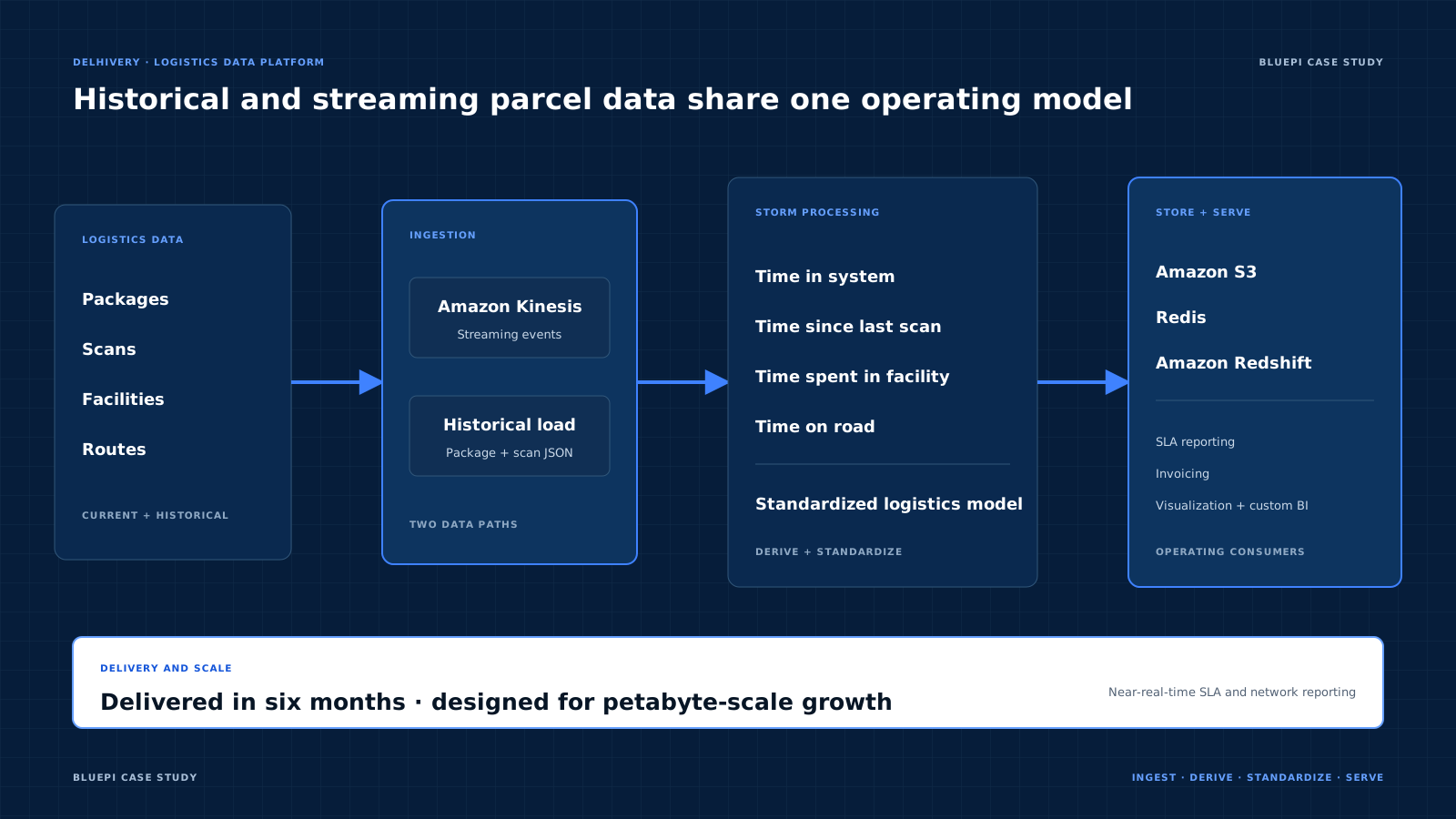
Delhivery needed fresher operational data and a standardized model for invoicing, business intelligence, and other consumers across a high-volume parcel network. BluePi built a data warehousing and analytics path on AWS using S3, Kinesis, Redshift, Redis, and Storm.
01 · Operational event stream
The ingestion path prioritized events that affected reporting freshness and helped teams see delays, SLA breaches, route issues, and resource-allocation constraints.
02 · Shared logistics model
A standardized model reduced conflicting interpretations across invoicing, business intelligence, and analytical consumers.
03 · Separated growth layers
Storage, processing, and serving layers were designed for petabyte-scale growth and protected sensitive data with security controls.
BluePi collected operational data through AWS ingestion and storage services, processed near-real-time streams, modeled shared warehouse data in Redshift, and served reporting needs across invoicing, business intelligence, and operational views.
The ingestion path prioritized operational changes that affected reporting freshness and response.
A common model reduced conflicting interpretations across invoicing, reporting, and analytical consumers.
Storage, processing, and serving layers were separated so volume and workload changes could be handled deliberately.
Where this pattern fits
This pattern fits logistics leaders who need fresh operational data, clear service measures, and a platform that can grow with network volume.
Open a section to review the customer problem, implementation, business change, and architecture.
Operational data remained distributed across systems, the existing platform could not keep pace with growth, and network problems became visible too late. Teams needed a current view of SLA breaches, routes, facilities, package movement, and resource constraints.
BluePi connected historical package and scan ingestion with Amazon Kinesis streaming, Storm processing, Amazon S3, Redis, and Amazon Redshift. Derived movement measures and a standardized logistics model served near-real-time SLA reporting, invoicing, visualization, and custom BI.
The platform was delivered in six months and designed for petabyte-scale growth. Operations teams gained earlier visibility into SLA breaches, route constraints, facility delays, and resource-allocation issues.
Package, scan, facility, and route data entered streaming and historical ingestion paths. Storm processing derived measures such as time in system, time since last scan, time spent in a facility, and time on road. Amazon S3, Redis, and Redshift supported the standardized model and its reporting consumers.
BluePi delivered the platform in six months. The storage, processing, and serving layers were designed to support petabyte-scale growth as parcel and scan volume increased.
Historical and current network data shared one reporting foundation. Teams could identify SLA breaches, route constraints, facility delays, and utilization issues earlier, then use the same model for immediate action and longer-term analysis.