
Good fit
One operating workflow has a named owner, a measurable baseline, and users who can judge whether the result improves.
Build for ownership
BluePi works inside the client environment and transfers ownership throughout delivery.
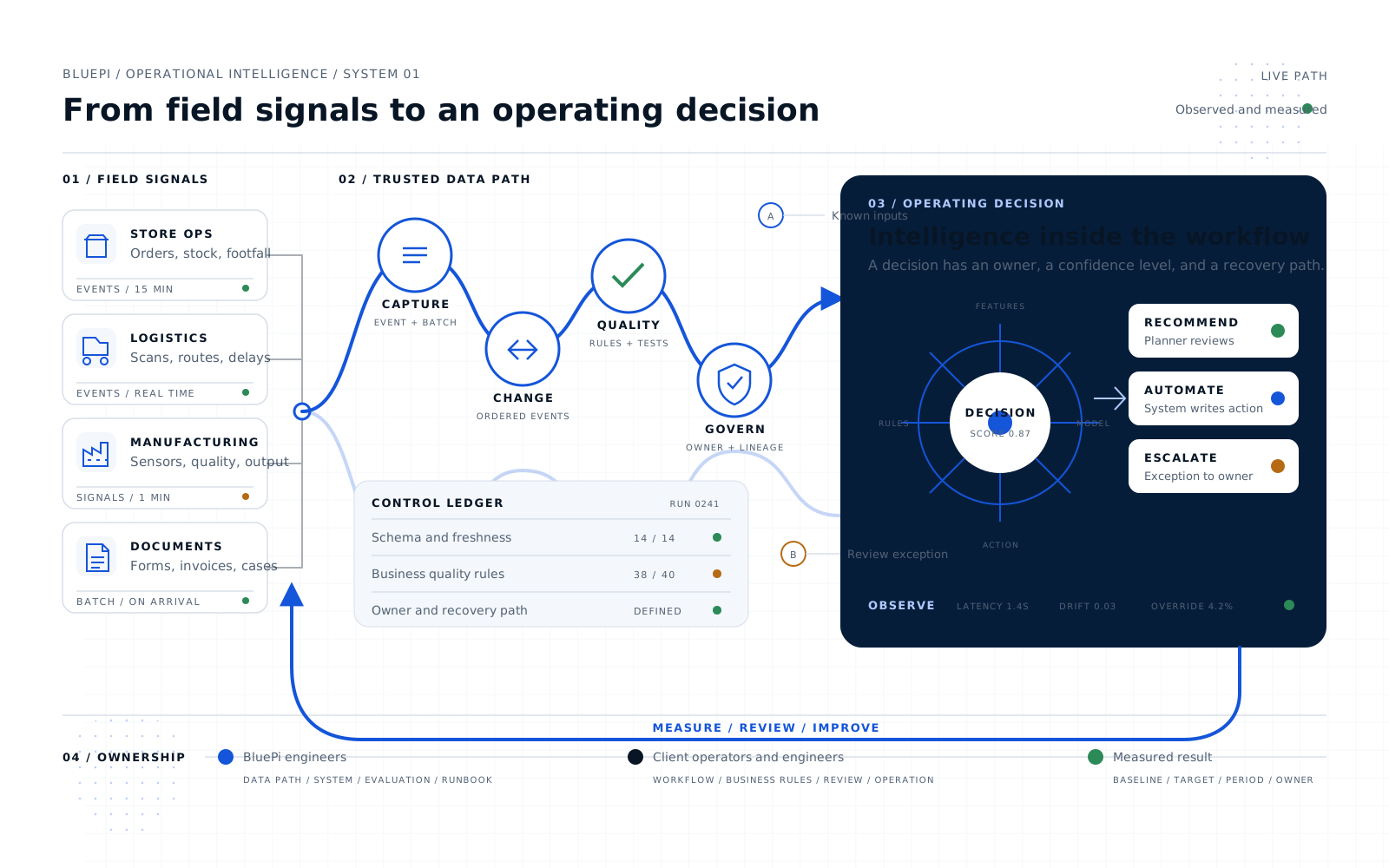
Ownership designed into delivery
BluePi builds the operating model with the system. Owners participate in architecture, deployment, monitoring, evaluation, incident handling, access, cost, and change decisions throughout delivery.
Handover is tested through practical tasks. Documentation supports the deployed reality, and support arrangements have a clear duration, response model, escalation route, and exit condition.
When this is the right starting point
Good fit
One operating workflow has a named owner, a measurable baseline, and users who can judge whether the result improves.
Poor fit
The request is capacity-only staffing, an unowned demonstration, or a broad transformation without a first decision and finish condition.
Evidence produced during delivery
01
Architecture decisions, deployment, rollback, dashboards, alerts, access, evaluation, incidents, and cost controls are reviewed with your team while the system is being built. Engineers pair on diagnosis and changes instead of saving knowledge transfer for the final week.
Runbooks explain observable symptoms, likely causes, safe checks, recovery actions, escalation, and the evidence to retain. They are tested against realistic failure scenarios before handover.
02
Before handover, your team should be able to deploy a controlled change, diagnose a failed data path, interpret the key measures, restore a service, review access, and explain the main risks. Named owners accept each operating responsibility.
The exit test also checks whether documentation matches the deployed system. Dashboards, alerts, repositories, environments, and support contacts must point to the running system.
03
If the system needs a support period, BluePi defines the scope, response model, duration, service hours, escalation route, and success conditions before release. The support period should reduce uncertainty and strengthen ownership.
For longer relationships, the operating record becomes the starting point for the next improvement cycle. New work is prioritized from measured behavior, user feedback, incidents, cost, and changes in the business workflow.
We will review the owner, the baseline, the data path, the system boundary, and the route to go-live.
Discuss one workflow