
Scan the relevant estate
The plan prioritizes systems and data stores by exposure and importance. Patterns, metadata, schema, samples, and configuration provide evidence without copying more personal data than required.
Source to evidence
Create a usable inventory of personal data, its purpose, owner, source, destination, access, retention, and known gaps.
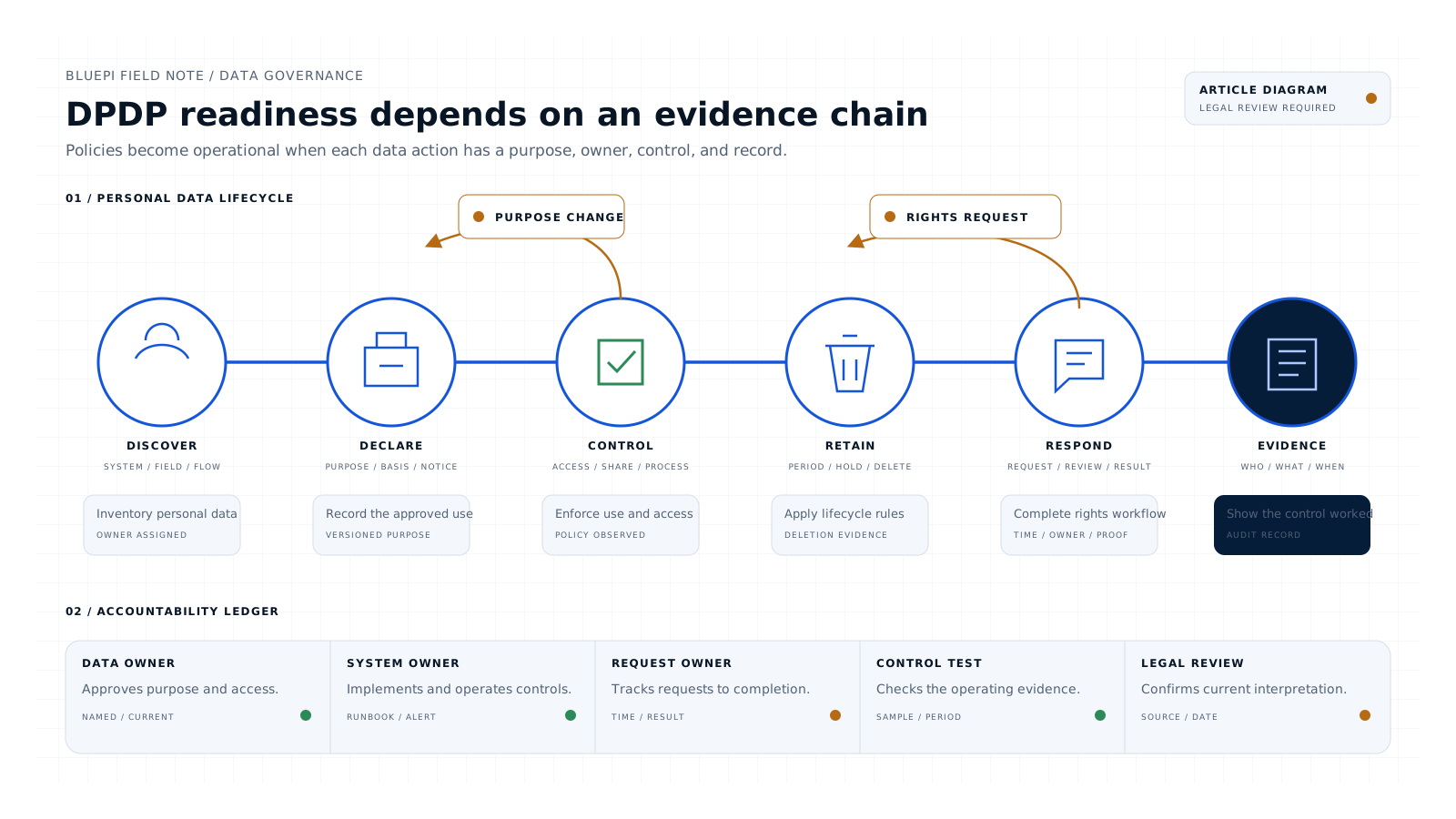
Personal-data discovery with context for action
Discovery creates a working inventory across databases, warehouses, lakes, files, SaaS platforms, applications, logs, backups, reports, and data movement. BluePi combines automated scanning with metadata and owner review.
A useful record carries purpose, sensitivity, subject type, source, processing, sharing, access, residency, retention, lineage, owner, and confidence. Unknowns remain visible for follow-up.
The plan prioritizes systems and data stores by exposure and importance. Patterns, metadata, schema, samples, and configuration provide evidence without copying more personal data than required.
Technical findings are reviewed with application, data, security, privacy, and business owners. False positives, ambiguous fields, derived data, and undocumented transfers receive a resolution record.
The inventory supports access review, retention, deletion, consent mapping, rights handling, lineage, security remediation, and evidence reporting through named downstream work.
When this is the right starting point
Good fit
One operating workflow has a named owner, a measurable baseline, and users who can judge whether the result improves.
Poor fit
The request is capacity-only staffing, an unowned demonstration, or a broad transformation without a first decision and finish condition.
Evidence produced during delivery
Open the part you need. Each section expands into the full delivery scope for that step.
Discovery covers operational applications, files, analytical platforms, reports, interfaces, archives, and third-party processors.
Each record connects the data to purpose, owner, source, destination, users, access, retention, and downstream processing.
The inventory provides an implementation base for consent, retention, rights requests, access, and security work.
An inventory your owners can act on: every personal-data store listed with its purpose, owner, source, destination, access, retention, and known gaps, verified against deployed systems rather than policy documents.
A spreadsheet says where personal data should be, while deployed copies spread through logs, exports, test stores, and integrations. Discovery follows the running systems rather than the intended design.
We will review the owner, the baseline, the data path, the system boundary, and the route to go-live.
Discuss one workflow