
Build the retention matrix
Data category, purpose, source, owner, start event, duration, system copies, legal hold, archive, deletion method, and evidence are connected in an implementable record.
Rule to lifecycle
BluePi traces approved retention rules through active data, backups, derived data, analytical copies, and processors.
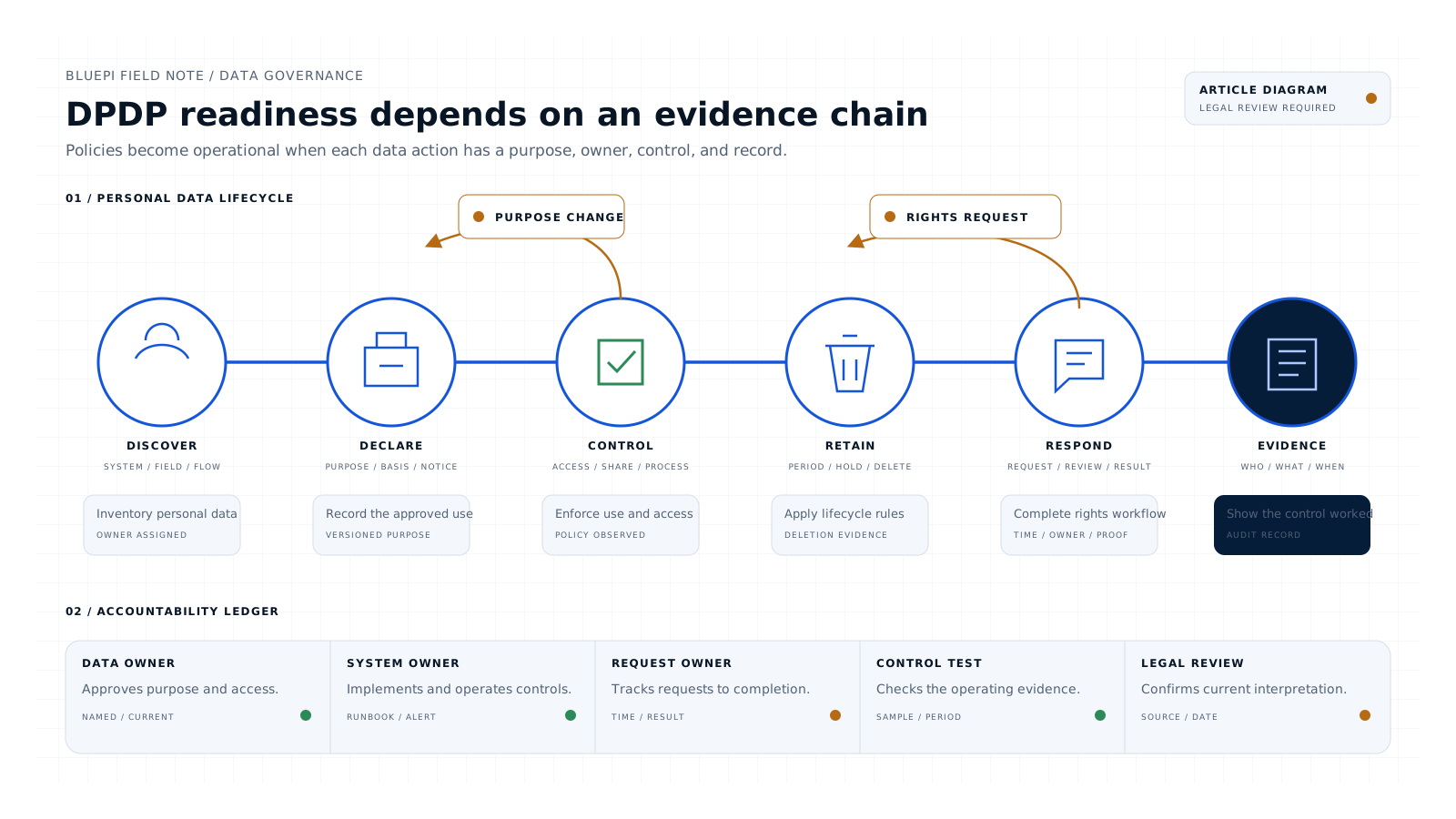
Retention policy implemented across real data copies
BluePi maps retention requirements to systems, tables, files, objects, reports, logs, backups, exports, models, and downstream processors. Counsel and accountable owners approve legal holds and retention rules.
The engineering work covers the full lifecycle from creation and active use through archive, deletion, verification, exception, and evidence. Shared data and technical dependencies are identified before automation is enabled.
Data category, purpose, source, owner, start event, duration, system copies, legal hold, archive, deletion method, and evidence are connected in an implementable record.
Deletion and archive jobs account for keys, relationships, downstream use, backups, recovery, model or report dependencies, access, retries, and the risk of partial execution.
Monitoring records eligible data, action taken, failures, exclusions, approvals, affected systems, verification, and overdue remediation through a reviewable control history.
When this is the right starting point
Good fit
One operating workflow has a named owner, a measurable baseline, and users who can judge whether the result improves.
Poor fit
The request is capacity-only staffing, an unowned demonstration, or a broad transformation without a first decision and finish condition.
Evidence produced during delivery
Open the part you need. Each section expands into the full delivery scope for that step.
Approved rules map to data classes, systems, owners, lifecycle actions, evidence, and exceptions.
The implementation plan includes backups, archives, derived data, analytical copies, exports, and downstream processors.
Teams verify that eligible records move through the approved action and that failed or blocked actions remain visible.
Deletion you can evidence to an auditor without manual assembly. Approved retention rules are traced through active data, backups, derived data, analytical copies, and processors, with legal holds and exceptions recorded rather than improvised.
We will review the owner, the baseline, the data path, the system boundary, and the route to go-live.
Discuss one workflow