
Insights · Topic
Forecasting and planning
Method selection, evaluation, and the operating workflow around a forecast. 2 guides, plus related customer work and papers.
Technical guides
Every guide in this topic, including the articles featured on the insights index.
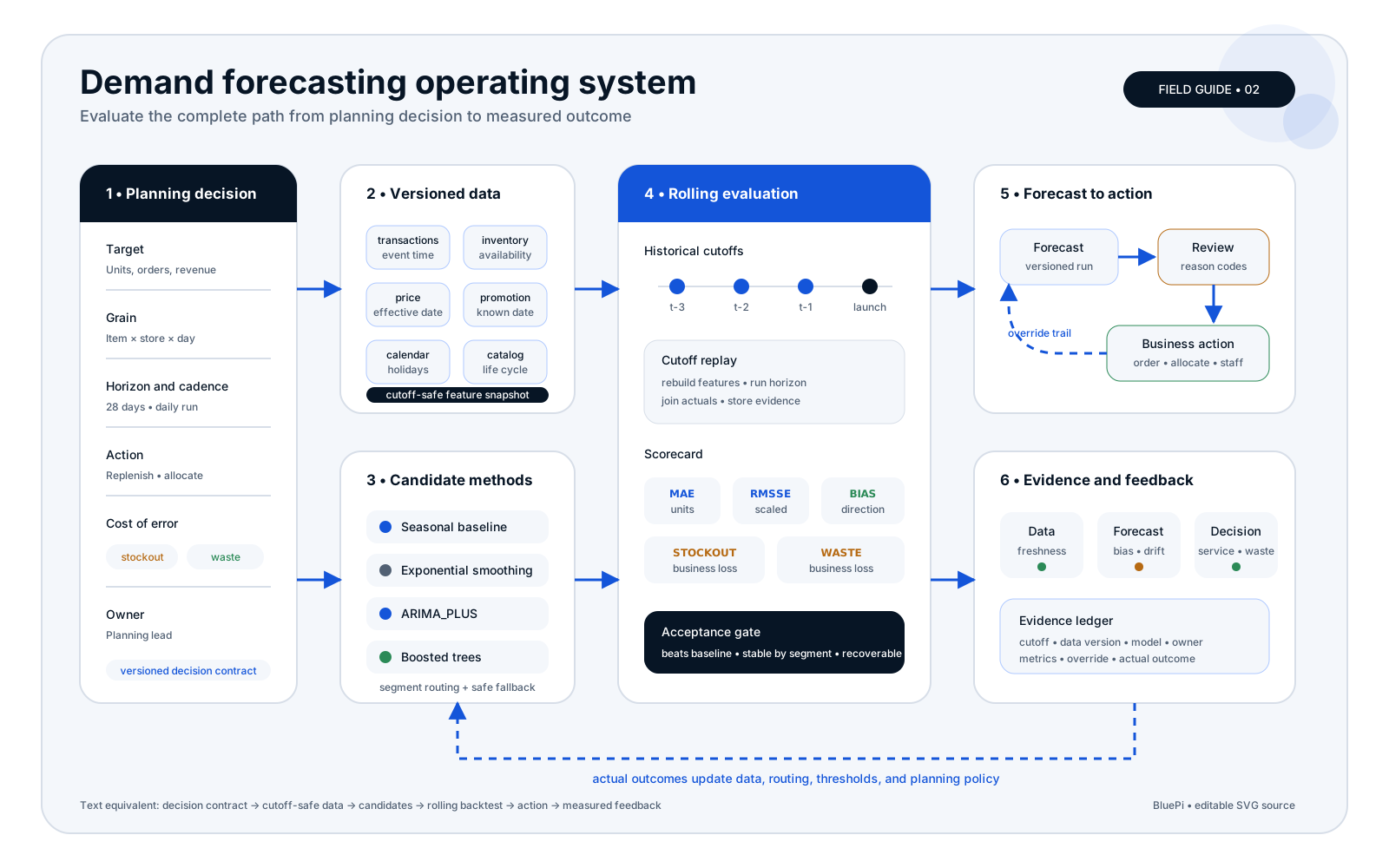
Demand forecasting techniques: how to choose and evaluate a method
Choose a forecasting method after defining the business decision, forecast horizon, hierarchy, data latency, and cost of error. Evaluate every candidate against a simple baseline by replaying past forecast cycles. Use the same information that would have been available on each historical cutoff date. Measure forecast quality at the level where the business acts, then monitor data, forecast, and override behavior after release.
Criteria for a good forecasting method
Evaluate forecasting methods by decision fit, horizon, data availability, bias, rolling backtests, business cost, operations, and ownership.
Customer work and research
Delivery evidence and published research connected to this topic.
A national lifestyle retailer connected SKU-store forecasts to inventory decisions
BluePi built a recurring forecasting and recommendation cycle for ordering, reordering, distribution, and redistribution. In one category, same-store sales grew 11 percent, the safety-stock factor moved from 2.5 to 1.5, and raw-material planning extended to nine months.
Hourly forecasts helped restaurant teams prepare before demand arrived
BluePi built store-level order and ingredient forecasts for every hour of the operating day. Restaurant teams used the forecast to prepare earlier, adjust for local conditions, and reduce food waste.
Retail demand forecasting patent
Indian patent 388811, granted from application 202111003053, covering a system and method for forecasting demand for a retail organization.
COVID-19 retail response paper
BluePi paper on retail demand signals and operating response during the pandemic disruption.
Other topics
Continue through the library by problem area.