
01 · POS, SAP, and HR links
Custom connectors kept source relationships intact so teams could analyze sales, inventory, people, and finance data together.
Customer work · Quick-service restaurants
A QSR franchisee worked across disconnected point-of-sale, SAP sales and inventory, HR, and related systems. Conflicting measures and manual reconciliation delayed financial and operating reports. BluePi integrated the sources in Snowflake, added continuous data-quality checks, and built transaction-matching workflows for investigation and correction.
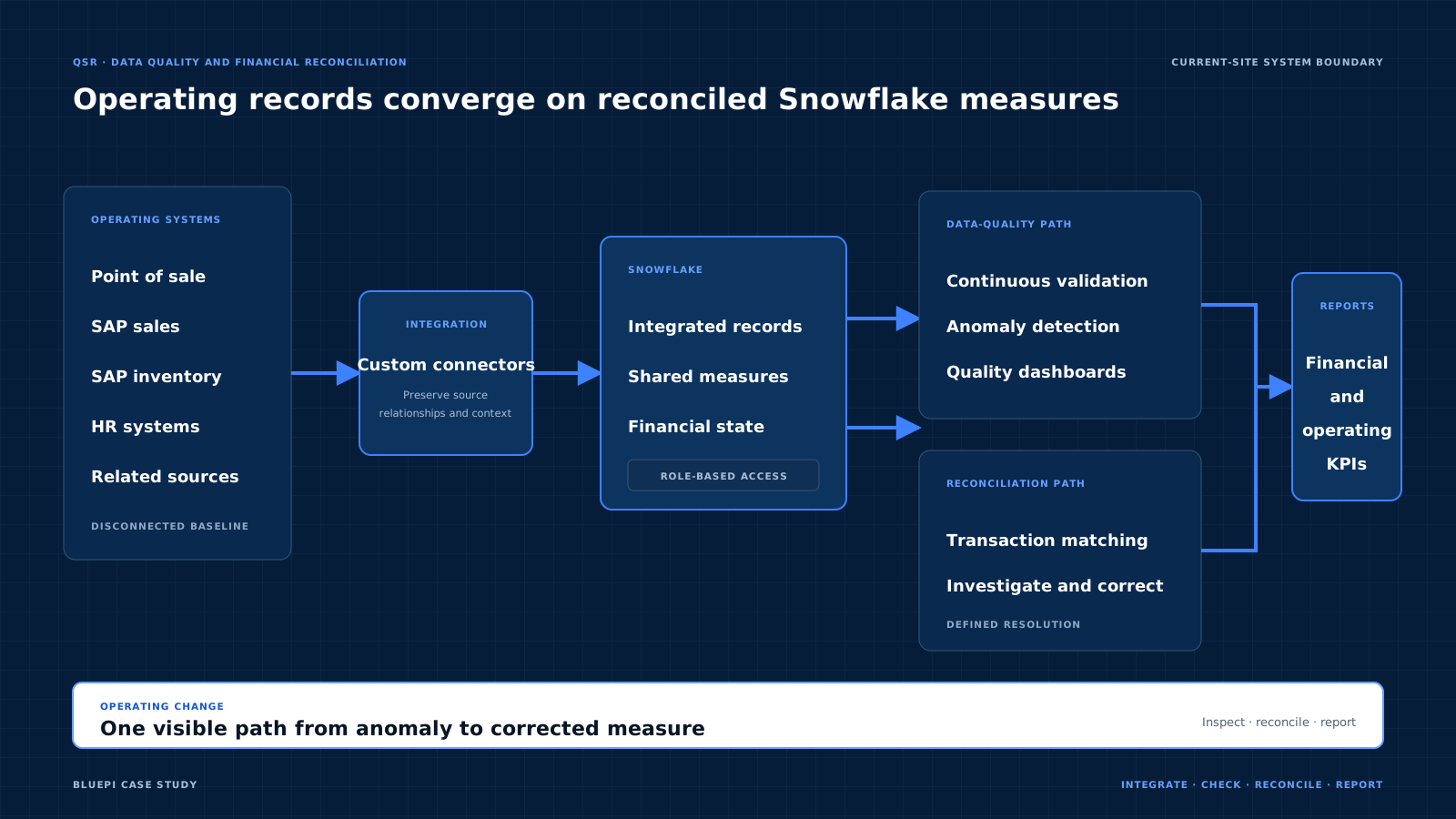
The franchisee needed confidence in financial and operating measures across POS, SAP sales and inventory, HR, and related systems. BluePi integrated those sources in Snowflake, preserved business relationships, and added validation, anomaly dashboards, transaction matching, and reconciliation workflows before KPIs reached reports.
01 · POS, SAP, and HR links
Custom connectors kept source relationships intact so teams could analyze sales, inventory, people, and finance data together.
02 · Anomalies before reports
Continuous validation and data-quality dashboards exposed questionable records before they affected shared financial and operating KPIs.
03 · Matched finance differences
Transaction matching and reconciliation workflows gave users a defined path to investigate and correct discrepancies.
Source records entered Snowflake through custom connectors. Role-based access opened departmental use, validation checked data continuously, dashboards surfaced anomalies, and matching workflows guided correction before reports consumed the KPI set.
Source-aware integration kept the links required for cross-functional analysis across POS, SAP, HR, and related data.
Automated checks and dashboards surfaced anomalies before they reached critical reports.
Matched transactions and a defined reconciliation workflow helped users investigate and correct financial differences.
Where this pattern fits
This case fits restaurant groups with multiple operating systems and low confidence in consolidated measures. BluePi can start with one reconciliation process, the source records it compares, and the reports that depend on the corrected result.
Open a section to review the customer problem, implementation, business change, and architecture.
Separate operating systems produced conflicting values for the same financial and operating measures. Teams combined data manually, found quality problems after reports failed, and spent additional time reconciling revenue and expense figures.
BluePi used custom connectors to preserve source relationships and business context while integrating the data in Snowflake. Role-based access supported departmental use. Continuous validation routines and data-quality dashboards exposed anomalies, while transaction-matching and reconciliation workflows guided users through correction.
Teams gained one route from operating records to reconciled financial and operating KPIs. Quality problems became visible before reaching critical reports, and reconciliation moved from disconnected investigation to a defined workflow.
Point-of-sale terminals, SAP sales and inventory modules, HR systems, and related sources moved through custom connectors into Snowflake. Role-based access controlled departmental use, while shared measures preserved the relationships required for cross-functional reporting.
Continuous validation routines and data-quality dashboards surfaced anomalies across critical source data. A separate transaction-matching path identified financial discrepancies and guided users through investigation and correction before the reconciled measures reached financial and operating reports.
Teams stopped assembling each cross-functional view from disconnected extracts. Data-quality and reconciliation work moved into visible control paths around the Snowflake repository, giving report owners one place to inspect anomalies, resolve differences, and use the corrected measures.