Workload contract
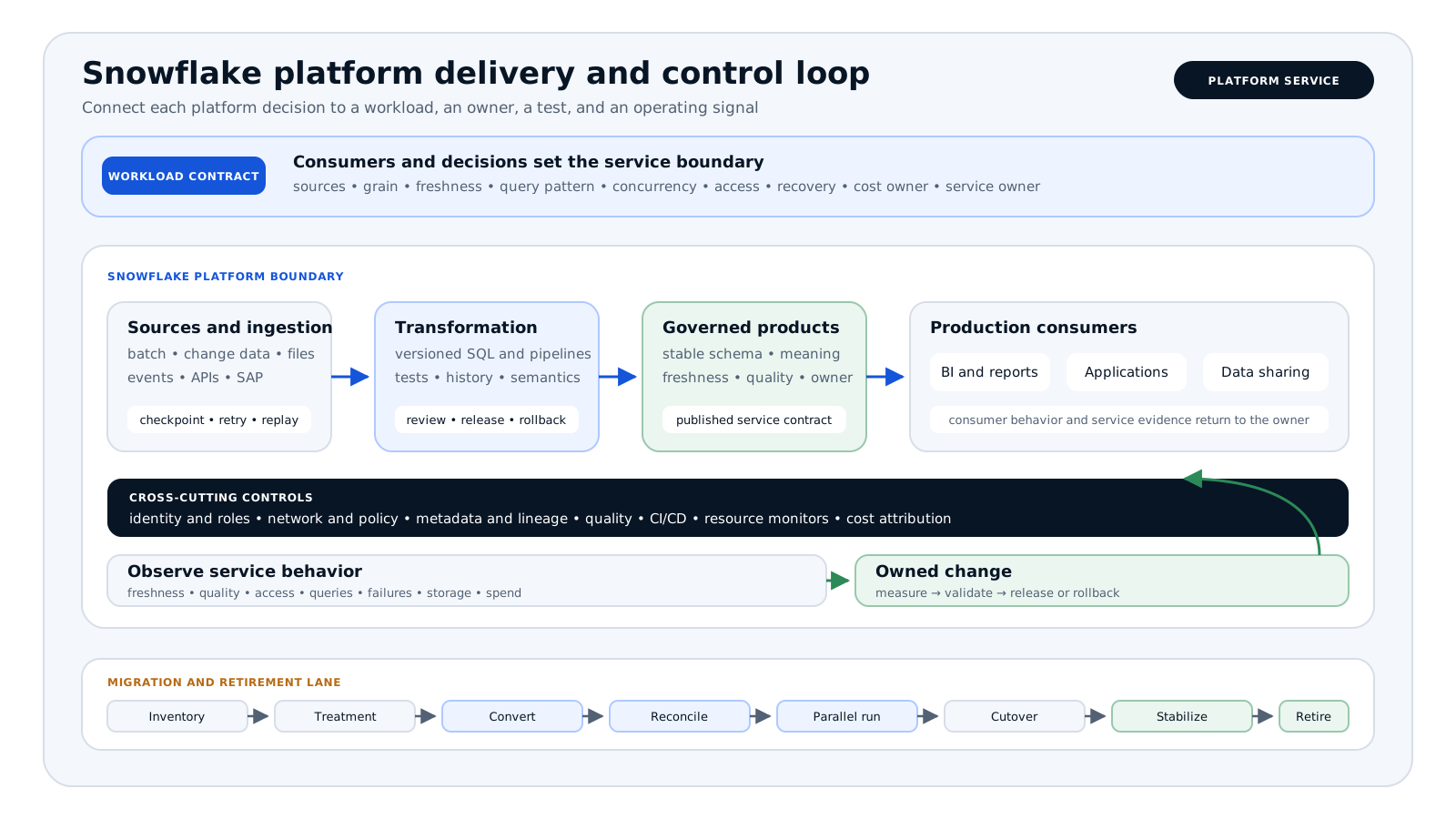
Define sources, consumers, grain, freshness, query pattern, concurrency, retention, access, recovery, cost owner, and service owner before selecting platform boundaries.
Workload contract to operated platform
BluePi is a Snowflake Premier Services Partner. We build the platform, migrate the workloads, and establish the controls required to run it.
Snowflake delivery backed by verified platform and migration work
BluePi is a Snowflake Premier Services Partner. Our Snowflake delivery spans platform implementation, Oracle-to-Snowflake migration, SAP integration, continuous replication, role-based access, data quality, reconciliation, analytics, performance, and security controls.
The implementation starts with the consumers and decisions the platform must support. Architecture, migration, engineering controls, and day-to-day operations follow those requirements.
Define sources, consumers, grain, freshness, query pattern, concurrency, retention, access, recovery, cost owner, and service owner before selecting platform boundaries.
Connect source inventory, workload treatment, comparison rules, cutover conditions, rollback, stabilization, and source retirement in one controlled record.
Assign ownership for data products, pipelines, access reviews, query performance, spend, incidents, releases, recovery, monitoring, and routine service reviews.
When this is the right starting point
Good fit
One operating workflow has a named owner, a measurable baseline, and users who can judge whether the result improves.
Poor fit
The request is capacity-only staffing, an unowned demonstration, or a broad transformation without a first decision and finish condition.
Evidence produced during delivery
Open the part you need. Each section expands into the full delivery scope for that step.
Start with the reports, models, applications, data exchanges, and operating decisions the platform must serve. For each workload, record its source systems, extraction boundary, data grain, keys, history, correction behavior, freshness, completion requirements, query pattern, concurrency, retention, recovery target, access, cost owner, and service owner.
This contract gives architecture and migration decisions a measurable reference.
Design Snowflake environments around ownership and failure boundaries. Define accounts, databases, schemas, warehouses, roles, network paths, sharing boundaries, retention, and deployment promotion.
Separate workloads where access, performance, recovery, or cost requirements differ. Record the reason for each boundary so the structure remains understandable as the platform grows.
Implement source onboarding through versioned configurations and deployment workflows. Preserve extraction mode, checkpoints, schema handling, correction behavior, retries, replay, and ownership for every source.
Transformation code has explicit inputs, outputs, tests, deployment history, and rollback. Data products publish stable schemas, semantics, freshness, quality status, and owners for their consumers.
Connect human and workload identities to role-based access. Define network controls, authentication, data-protection policies, review ownership, and audit evidence.
Run data-quality checks at ingestion, transformation, and publication boundaries. Version SQL, pipeline configuration, policies, and infrastructure. Promote changes through reviewed deployment paths rather than editing production manually.
Classify each source workload as retire, replace, translate, refactor, rebuild, or defer. Convert dependency-closed groups so pipelines, data models, reports, and security rules can be tested together.
Define the final data load, reconciliation window, consumer switch, schedule change, credential change, rollback conditions, and point of no return.
Keep the source path available until required comparisons pass and the target completes the agreed stabilization period. Retire legacy jobs only after downstream dependencies, retained data, credentials, duplicate writes, monitoring, and support ownership are resolved.
Monitor query behavior, queueing, warehouse use, freshness, data quality, failed jobs, access changes, policy results, storage, and spend. Attribute performance and cost to workloads and owners.
Use measured query and service behavior to decide when to resize, reschedule, isolate, cache, cluster, rewrite, or remove work. Validate each change against the workload contract.
Complete the implementation with runbooks, dashboards, alerts, access-review procedures, release workflows, recovery exercises, cost reviews, architecture records, and named escalation paths.
The receiving team can deploy a change, investigate a failed pipeline, trace access, reconcile a data issue, recover a workload, and explain material spend without depending on the implementation team.
A production implementation includes workload and source contracts, account and data architecture, ingestion, transformation, access controls, quality checks, deployment workflows, migration, validation, monitoring, recovery, cost controls, and operating ownership.
Compare source and target data, business rules, consumer outputs, access behavior, schedules, freshness, recovery, performance, and cost. Use aligned runs for workloads that need parallel validation, and define pass criteria before cutover.
Assign workloads to owners, establish performance and cost baselines, and monitor query behavior, queueing, warehouse use, storage, freshness, and spend. Validate changes to compute, scheduling, isolation, clustering, caching, or SQL against the workload contract.
The operating team receives release workflows, monitoring, runbooks, access reviews, recovery procedures, cost reviews, architecture records, and escalation paths. Legacy systems remain available until validation and stabilization criteria are complete.
We will review the owner, the baseline, the data path, the system boundary, and the route to go-live.
Discuss one workflow