
Insights · Topic
AI systems
Models, evaluation, grounding, agents, serving paths, and the cost per decision. 5 guides, plus related customer work and papers.
Technical guides
Every guide in this topic, including the articles featured on the insights index.
Nested Learning in practice: deep optimizers and multi-clock transformers
Understand Nested Learning, deep-optimizer geometry, multi-clock systems, and runnable reference implementations for continual learning.
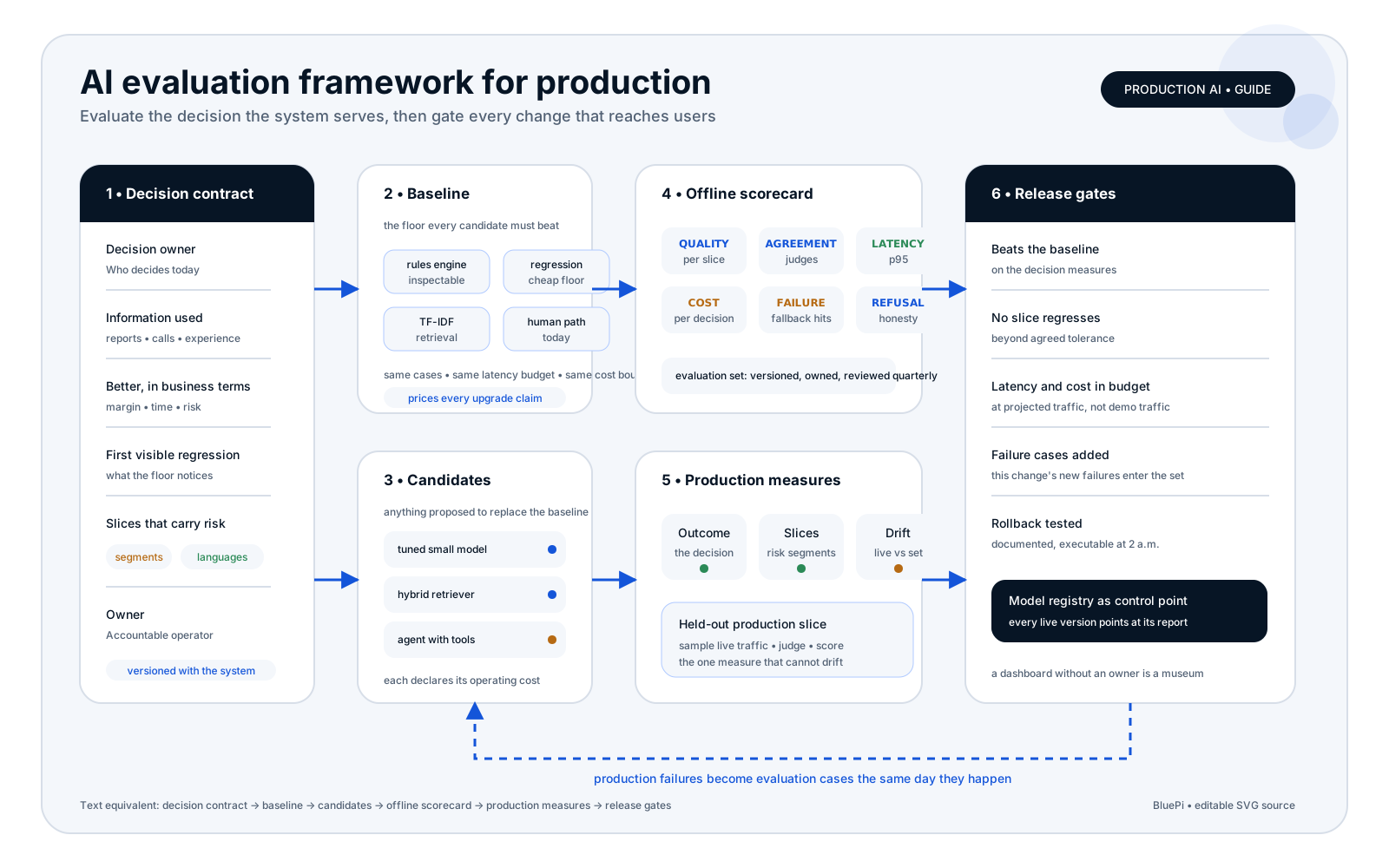
What is an AI evaluation framework for production systems?
A practical AI evaluation framework: decision framing, baselines, slice measures, drift signals, and release gates that keep deployed systems owned and improving.
Production inference on Google Cloud: choose the serving path from the workload
Choose a Google Cloud inference path using model size, latency, traffic, control, reliability, evaluation, and cost requirements.
Hybrid recommendation systems: combine signals and measure the decision
Design a hybrid recommendation system with clear candidates, ranking, fallbacks, evaluation measures, and operating controls.
TF-IDF for document retrieval: build the baseline before adding complexity
Learn how TF-IDF weights terms, how cosine similarity ranks documents, and how to evaluate a lexical retrieval baseline.
Customer work and research
Delivery evidence and published research connected to this topic.
A multilingual chatbot addressed repetitive support questions
Seventy percent of the organization’s customer queries repeated questions support executives had already answered. BluePi designed an AI-enabled chatbot using structured question-and-answer content and natural-language understanding across digital and voice channels.
A dealer recommendation system increased click-through rate by 15%
A distributor wanted to improve product discovery across a 16,000-dealer network. BluePi prepared catalogue, dealer, purchase, and SKU data on AWS and built recommendation paths for related products, similar-dealer behavior, and seasonal stocking.
DHFL Pramerica used an AWS data lake to turn policy data into customer risk profiles
DHFL Pramerica needed a consolidated customer view and a repeatable way to assess risk before recommending insurance products. BluePi built a machine-learning path from life-policy data through AWS Glue, Amazon S3, Amazon EMR, and Amazon Redshift. The system produced high-, medium-, and low-risk customer segments from demographic, education, health, and policy attributes.
Other topics
Continue through the library by problem area.