
Insights · Topic
Migration and modernization
Cost models, cutover risk, and controlled treatment of legacy estates. 2 guides, plus related customer work and papers.
Technical guides
Every guide in this topic, including the articles featured on the insights index.
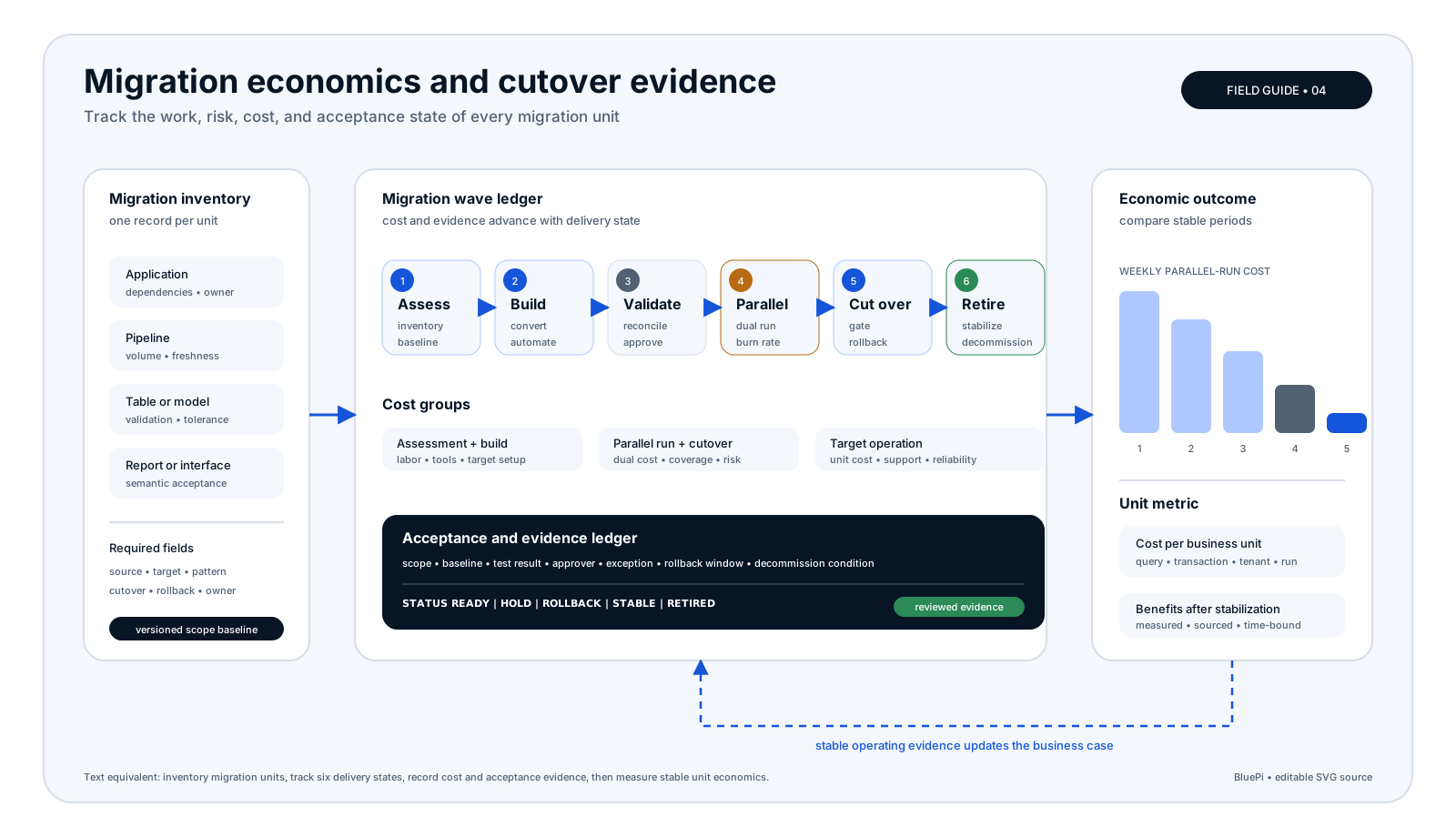
Build a migration cost model that includes delivery and cutover risk
A migration business case should include the cost of moving, the cost of running two environments, the work required to prove equivalence, and the cost of operating the target state. Compare unit cost and service behavior before and after migration. Keep benefits, estimates, and verified results as separate records.
Application modernization: choose a treatment and control the change
Assess an application, choose a modernization treatment, migrate in controlled stages, and measure reliability, delivery, security, and cost.
Customer work and research
Delivery evidence and published research connected to this topic.
A pharmacy benefits application moved from a decades-old monolith to service boundaries
A pharmacy benefits provider depended on a decades-old application whose interdependent code had become difficult to maintain and scale. BluePi used a strangler-pattern transition and refactored selected application areas into cloud-native service boundaries.
PeopleStrong moved enterprise HR analytics from Cloudera to BigQuery
BluePi and PeopleStrong migrated a large HR and payroll analytics estate from Cloudera to Google Cloud. Report response time fell from 15–30 minutes to under 5 minutes, analytics refresh fell from 8 hours to 30 minutes, and the platform supports more than 500 report executions per hour.
A two-wheeler manufacturer migrated Oracle analytics to Snowflake and eliminated report failures
The manufacturer’s Oracle warehouse and OBIEE reporting path suffered downtime, delayed data, peak-period failures, and weak integration. BluePi migrated the warehouse to Snowflake, replaced OBIEE with Power BI, integrated SAP finance, and added continuous Fivetran replication.
Other topics
Continue through the library by problem area.